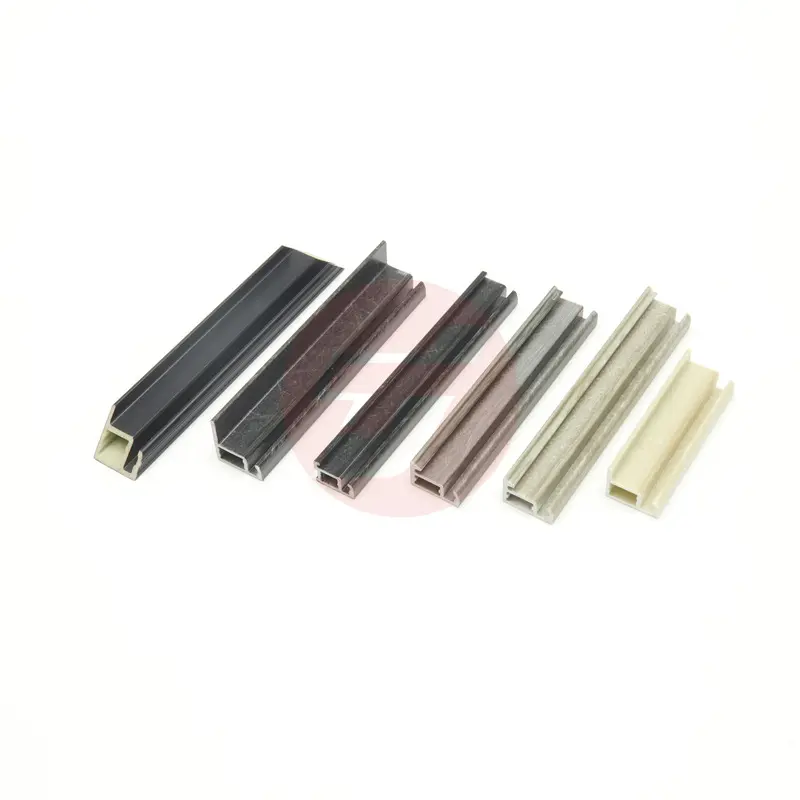
Lightweight Unsaturated Pultruded Rods: Advanced Composite Reinforcement Solutions for Superior Structural Performance

All Categories

Get a Free Quote

A professional manufacturer of composite material molds.
Email
WhatsApp
Name
Company Name
Message
0/1000
Attachment
Please upload at least an attachment
Up to 3 files,more 30mb,suppor jpg、jpeg、png、pdf、doc、docx、xls、xlsx、csv、txt

lightweight unsaturated pultruded rods

Lightweight unsaturated pultruded rods represent a revolutionary advancement in composite material engineering, combining exceptional strength-to-weight ratios with outstanding durability and versatility. These innovative structural components are manufactured through an advanced pultrusion process that creates continuous fiber-reinforced polymer composites with unsaturated resin systems. The main functions of lightweight unsaturated pultruded rods include providing structural support in construction applications, serving as reinforcement elements in concrete structures, and offering corrosion-resistant alternatives to traditional steel reinforcement. The technological features of these rods encompass their unique manufacturing process, which involves pulling continuous glass or carbon fibers through a heated die while impregnating them with unsaturated polyester or vinyl ester resins. This process ensures consistent cross-sectional properties and superior mechanical characteristics throughout the entire length of the rod. The resulting products exhibit excellent tensile strength, superior corrosion resistance, electromagnetic transparency, and thermal stability. Applications for lightweight unsaturated pultruded rods span across multiple industries, including civil engineering, marine construction, chemical processing facilities, and infrastructure development projects. In construction, these rods serve as concrete reinforcement bars that eliminate the risk of corrosion-related structural deterioration. Marine applications benefit from their saltwater resistance and reduced maintenance requirements. Chemical processing plants utilize these rods in environments where traditional materials would quickly degrade due to aggressive chemical exposure. The rods also find extensive use in bridge construction, tunnel lining, seawalls, and other infrastructure projects where long-term durability and minimal maintenance are crucial factors for project success and economic viability.

New Product Recommendations

The advantages of lightweight unsaturated pultruded rods deliver significant practical benefits that make them superior alternatives to conventional materials in numerous applications. These rods weigh approximately 75% less than equivalent steel reinforcement, which dramatically reduces transportation costs and simplifies installation procedures. Workers can handle longer sections without mechanical lifting equipment, leading to faster construction timelines and reduced labor expenses. The corrosion resistance of lightweight unsaturated pultruded rods eliminates the primary cause of structural failure in traditional reinforced concrete, extending service life by decades and reducing maintenance requirements. Unlike steel reinforcement that rusts and expands, these composite rods maintain their integrity in harsh environments including saltwater exposure, chemical processing facilities, and freeze-thaw cycles. This durability translates directly into lower lifecycle costs and reduced replacement expenses for building owners and infrastructure managers. The electromagnetic transparency of lightweight unsaturated pultruded rods provides crucial advantages in specialized applications where radio frequency interference must be minimized. Hospitals, laboratories, and communication facilities benefit from reinforcement that does not interfere with sensitive electronic equipment or wireless communications systems. The thermal properties of these rods offer superior performance compared to steel alternatives. They exhibit lower thermal conductivity, reducing thermal bridging effects that can compromise building energy efficiency. This characteristic helps maintain consistent interior temperatures while reducing heating and cooling costs over the building's operational lifetime. Installation benefits include the ability to cut rods on-site with standard tools, eliminating the need for specialized equipment or hot work permits. The lightweight nature allows contractors to work more efficiently, reducing project timelines and associated costs. Quality control advantages stem from the consistent manufacturing process, which produces rods with uniform properties and eliminates the variability often found in traditional reinforcement materials. The chemical inertness of lightweight unsaturated pultruded rods prevents reactions with concrete additives or environmental contaminants, ensuring long-term structural integrity and performance reliability.

Practical Tips

How Can Carbon Fiber Pultrusion Reduce Manufacturing Costs for B2B Buyers?

29

Dec

How Can Carbon Fiber Pultrusion Reduce Manufacturing Costs for B2B Buyers?

Manufacturing costs continue to challenge B2B buyers across industries, driving the need for innovative production methods that deliver superior performance while maintaining economic efficiency. Carbon fiber pultrusion has emerged as a transformativ...
View More
What Advantages Do Glass Fiber Pultruded Products Offer in Construction?

29

Dec

What Advantages Do Glass Fiber Pultruded Products Offer in Construction?

Construction professionals are increasingly turning to advanced composite materials to meet the demanding requirements of modern infrastructure projects. Among these innovative solutions, glass fiber pultruded products have emerged as a superior alte...
View More
Why Do Wind Turbine OEMs Prefer High-Accuracy Carbon Fiber Beam Molds?

05

Jan

Why Do Wind Turbine OEMs Prefer High-Accuracy Carbon Fiber Beam Molds?

The wind energy sector has experienced unprecedented growth as global demand for renewable energy solutions continues to surge. Original Equipment Manufacturers (OEMs) in the wind turbine industry face increasing pressure to deliver high-performance,...
View More
What Factors Determine the Lifespan of Carbon Fiber Pultruded Products?

13

Feb

What Factors Determine the Lifespan of Carbon Fiber Pultruded Products?

Carbon fiber pultrusion represents one of the most advanced manufacturing processes for creating high-performance composite materials with exceptional strength-to-weight ratios. This innovative technique produces continuous fiber-reinforced profiles ...
View More

Get a Free Quote

A professional manufacturer of composite material molds.
Email
WhatsApp
Name
Company Name
Message
0/1000
Attachment
Please upload at least an attachment
Up to 3 files,more 30mb,suppor jpg、jpeg、png、pdf、doc、docx、xls、xlsx、csv、txt

lightweight unsaturated pultruded rods

Superior Corrosion Resistance and Longevity

Superior Corrosion Resistance and Longevity

The exceptional corrosion resistance of lightweight unsaturated pultruded rods fundamentally transforms structural design and maintenance approaches across multiple industries. Unlike traditional steel reinforcement that suffers from oxidation and deterioration when exposed to moisture, chlorides, and environmental contaminants, these composite rods maintain their structural integrity indefinitely in aggressive environments. This remarkable resistance stems from the thermoset resin matrix that completely encapsulates the reinforcing fibers, creating an impermeable barrier against corrosive agents. The significance of this corrosion resistance cannot be overstated, particularly in marine environments, chemical processing facilities, and infrastructure exposed to de-icing salts. Traditional concrete structures reinforced with steel typically require major rehabilitation or replacement within 20-30 years due to corrosion-induced damage, resulting in enormous costs and service disruptions. Lightweight unsaturated pultruded rods eliminate this degradation mechanism entirely, extending structure service life to 75-100 years or more. The economic value proposition becomes compelling when lifecycle costs are considered. While initial material costs may be higher than steel, the elimination of corrosion-related maintenance, repairs, and premature replacement creates substantial savings over the structure's operational lifetime. Bridge owners report cost savings of 40-60% when comparing lifecycle expenses of structures reinforced with composite rods versus traditional steel reinforcement. The environmental benefits extend beyond economic considerations, as longer-lasting structures reduce material consumption, construction waste, and the carbon footprint associated with frequent reconstruction projects. Industries operating in particularly harsh environments, such as wastewater treatment facilities, chemical plants, and offshore structures, find that lightweight unsaturated pultruded rods provide the only viable long-term reinforcement solution. The ability to specify reinforcement that will outlast the design life of the concrete itself represents a paradigm shift in structural engineering approaches and asset management strategies.

Exceptional Strength-to-Weight Performance

Exceptional Strength-to-Weight Performance

The outstanding strength-to-weight ratio of lightweight unsaturated pultruded rods delivers transformative benefits that revolutionize construction methodologies and structural performance. These composite rods typically achieve tensile strengths comparable to or exceeding high-strength steel while weighing only 25% as much, creating unprecedented opportunities for structural optimization and construction efficiency. This remarkable performance characteristic stems from the continuous fiber reinforcement aligned along the rod's length, providing maximum strength in the primary load direction. The practical implications of this strength-to-weight advantage manifest in numerous ways throughout the construction process. Transportation costs decrease significantly as trucks can carry substantially more linear footage of reinforcement per load, reducing delivery expenses and project logistics complexity. A single worker can easily handle 40-foot sections of lightweight unsaturated pultruded rods that would require mechanical assistance or multiple workers with equivalent steel reinforcement. This ease of handling accelerates installation schedules and reduces labor costs while improving worker safety and reducing injury risks associated with heavy material handling. The structural design benefits enable engineers to optimize reinforcement layouts and reduce overall material quantities while maintaining or improving structural performance. The high strength allows for increased spacing between reinforcement elements or the use of smaller diameter rods to achieve equivalent load capacity. This optimization reduces concrete congestion, improves constructability, and can lead to overall project cost reductions. In seismic applications, the lower mass of lightweight unsaturated pultruded rods reduces the dynamic loads transmitted to structures during earthquake events, potentially allowing for lighter foundations and reduced structural mass throughout the building system. The fatigue resistance of these composite materials surpasses steel performance, making them ideal for structures subjected to cyclic loading such as bridges, towers, and marine structures. Quality control benefits emerge from the manufacturing process consistency, which produces rods with predictable properties and minimal variation. This reliability allows engineers to specify precise performance characteristics and reduces safety factors required to account for material variability, leading to more efficient and economical designs.
Electromagnetic Transparency and Thermal Performance

Electromagnetic Transparency and Thermal Performance

The unique electromagnetic transparency and superior thermal characteristics of lightweight unsaturated pultruded rods provide specialized performance benefits that make them indispensable in applications where conventional reinforcement creates operational problems or energy efficiency concerns. Unlike steel reinforcement which acts as an electromagnetic conductor and can interfere with sensitive electronic systems, these composite rods allow electromagnetic waves to pass through unimpeded, making them essential for structures housing critical electronic equipment or communication systems. This electromagnetic neutrality proves crucial in hospitals where MRI facilities require non-magnetic reinforcement to prevent image distortion and equipment malfunction. Similarly, airport radar facilities, communication towers, and research laboratories benefit from reinforcement that does not interfere with sensitive instrumentation or signal transmission. The thermal properties of lightweight unsaturated pultruded rods offer significant advantages over traditional steel reinforcement in energy-conscious construction applications. The thermal expansion coefficient of these composite materials more closely matches that of concrete compared to steel, reducing internal stresses caused by differential thermal movement. This compatibility minimizes cracking and extends structure service life while improving overall durability. The low thermal conductivity of lightweight unsaturated pultruded rods virtually eliminates thermal bridging effects that compromise building envelope performance. Thermal bridges created by continuous steel reinforcement can account for 10-20% of total building energy losses, representing substantial operational cost increases over the building's lifetime. By specifying composite reinforcement, building designers can achieve superior thermal performance and reduce heating and cooling expenses while improving occupant comfort. Fire performance characteristics add another dimension of value, as lightweight unsaturated pultruded rods maintain their structural properties at elevated temperatures better than steel alternatives. While steel loses strength rapidly above 400°F, properly formulated composite rods can maintain structural integrity at temperatures exceeding 600°F, providing enhanced fire safety margins. The installation advantages extend to specialized environments where hot work restrictions prevent steel cutting and welding operations. Composite rods can be cut and modified using standard hand tools without generating sparks or requiring hot work permits, enabling construction in refineries, chemical plants, and other hazardous locations where traditional steel work would be prohibited or require extensive safety protocols.

Get a Free Quote

A professional manufacturer of composite material molds.
Email
WhatsApp
Name
Company Name
Message
0/1000
Attachment
Please upload at least an attachment
Up to 3 files,more 30mb,suppor jpg、jpeg、png、pdf、doc、docx、xls、xlsx、csv、txt