 EN
EN
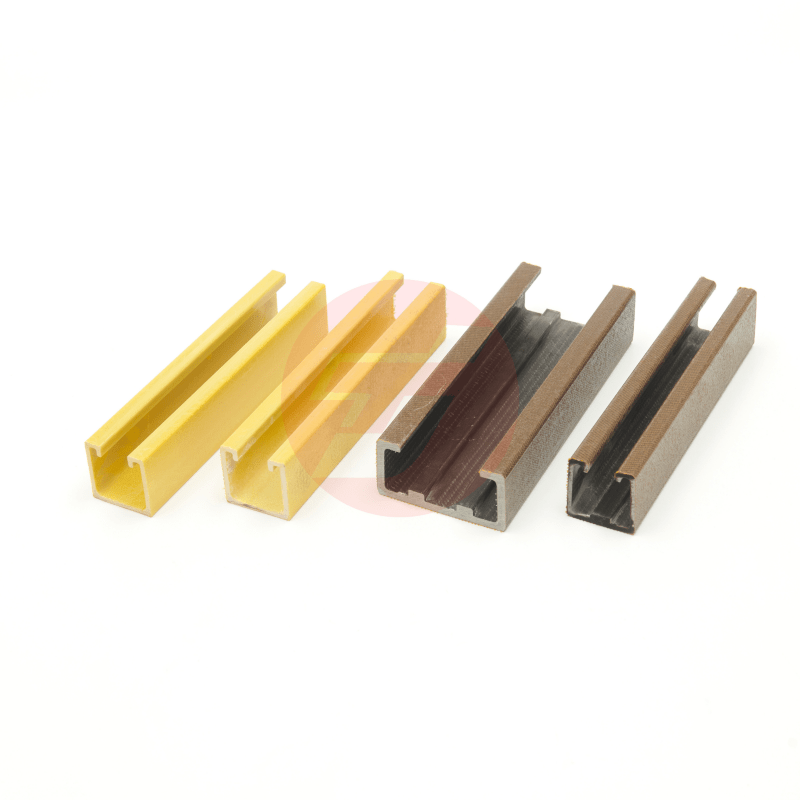
Carbon fiber pultrusion represents one of the most advanced manufacturing processes for creating high-performance composite materials with exceptional strength-to-weight ratios. This innovative technique produces continuous fiber-reinforced profiles that are revolutionizing industries from aerospace to renewable energy. Understanding the factors that influence the longevity of these materials is crucial for engineers, manufacturers, and end-users who rely on carbon fiber pultrusion for critical applications where durability and reliability are paramount.
Understanding Carbon Fiber Pultrusion Manufacturing Process
Core Manufacturing Principles
The carbon fiber pultrusion process involves pulling continuous carbon fibers through a resin bath before guiding them through a heated die that shapes and cures the composite material. This controlled manufacturing environment ensures consistent fiber orientation and resin distribution, which directly impacts the final product's mechanical properties and service life. The precision of this process allows manufacturers to achieve fiber volume fractions typically ranging from 50% to 70%, optimizing both strength and durability characteristics.
Temperature control during the carbon fiber pultrusion process plays a critical role in achieving proper crosslinking of the polymer matrix. The curing profile must be carefully managed to ensure complete polymerization while avoiding thermal degradation of the carbon fibers. Modern pultrusion systems incorporate sophisticated heating zones that gradually bring the composite to optimal curing temperatures, typically between 120°C to 180°C depending on the resin system used.
Quality Control and Consistency Factors
Consistent tension control throughout the carbon fiber pultrusion line ensures uniform fiber distribution and prevents the formation of voids or weak spots that could compromise long-term performance. Advanced pultrusion equipment utilizes computerized tension monitoring systems that maintain precise control over individual fiber tows, ensuring optimal consolidation and mechanical properties. These quality control measures directly translate to improved fatigue resistance and extended service life of the finished products.
The selection of compatible resin systems for carbon fiber pultrusion significantly influences the final product's resistance to environmental degradation. Epoxy, vinyl ester, and polyurethane resins each offer distinct advantages in terms of chemical resistance, thermal stability, and mechanical properties. The choice of resin system must align with the intended application environment to maximize the composite's operational lifespan.
Material Selection and Fiber Architecture
Carbon Fiber Grade and Quality
The grade and quality of carbon fibers used in the pultrusion process fundamentally determine the composite's mechanical properties and long-term durability. High-modulus carbon fibers provide superior stiffness and fatigue resistance, making them ideal for applications requiring extended service life under cyclic loading conditions. Standard modulus fibers offer excellent strength characteristics while maintaining cost-effectiveness for general-purpose carbon fiber pultrusion applications.
Surface treatment of carbon fibers before the pultrusion process enhances the fiber-matrix interface, improving load transfer efficiency and reducing the likelihood of delamination over time. Properly treated carbon fibers exhibit superior adhesion to the resin matrix, resulting in improved interlaminar shear strength and enhanced resistance to moisture ingress, both critical factors for long-term performance in challenging environments.
Fiber Architecture and Orientation
The arrangement and orientation of carbon fibers within the pultruded profile significantly impact the material's anisotropic properties and fatigue behavior. Unidirectional fiber arrangements provide maximum strength and stiffness in the longitudinal direction, while multi-directional reinforcement schemes offer improved transverse properties and damage tolerance. The optimal fiber architecture for carbon fiber pultrusion depends on the specific loading conditions and performance requirements of the intended application.
Hybrid reinforcement strategies combining carbon fibers with glass or aramid fibers can enhance specific performance characteristics while optimizing cost-effectiveness. These hybrid carbon fiber pultrusion products may exhibit improved impact resistance, reduced notch sensitivity, or enhanced electrical conductivity, depending on the secondary fiber type and arrangement. The careful selection of hybrid configurations can extend service life by addressing specific failure modes common to pure carbon fiber composites.
Environmental and Operational Factors
Temperature Exposure and Thermal Cycling
Thermal exposure represents one of the most significant factors affecting the long-term performance of carbon fiber pultrusion products. Elevated temperatures can accelerate matrix degradation, reduce fiber-matrix adhesion, and promote oxidation of the carbon fibers themselves. The glass transition temperature of the resin system establishes the upper service temperature limit, beyond which mechanical properties begin to deteriorate rapidly.
Thermal cycling introduces additional stress factors through differential thermal expansion between the carbon fibers and polymer matrix. These thermal stresses can lead to microcracking, delamination, and progressive damage accumulation over repeated temperature cycles. Proper material selection for carbon fiber pultrusion applications must consider both the maximum operating temperature and the expected thermal cycling severity.
Chemical Exposure and Environmental Degradation
Chemical compatibility between the carbon fiber pultrusion composite and its operating environment directly influences service life expectations. Acidic or alkaline environments can attack the polymer matrix, leading to surface degradation, weight loss, and reduced mechanical properties. The carbon fibers themselves are generally inert to most chemicals, but matrix degradation can expose fibers to direct chemical attack or allow environmental ingress that compromises the fiber-matrix interface.
Moisture absorption and hygrothermal effects represent particular challenges for carbon fiber pultrusion products in humid or aquatic environments. Water uptake can plasticize the polymer matrix, reduce glass transition temperature, and create osmotic pressure that leads to internal stress development. Advanced resin systems with improved moisture resistance and proper surface protection can significantly extend service life in challenging environmental conditions.
Mechanical Loading and Fatigue Considerations
Static Loading and Creep Resistance
Static loading conditions and long-term creep behavior significantly influence the operational lifespan of carbon fiber pultrusion components. While carbon fibers exhibit minimal creep under sustained loading, the polymer matrix can experience time-dependent deformation that leads to stress redistribution and potential failure over extended periods. The viscoelastic nature of polymer matrices requires careful consideration of load duration and magnitude in service life predictions.
Stress concentration factors arising from geometric discontinuities, joints, or surface defects can dramatically reduce the fatigue life of carbon fiber pultrusion products. Proper design practices including generous fillet radii, smooth transitions, and appropriate load introduction methods are essential for maximizing service life under sustained loading conditions. Surface quality and finish consistency also play crucial roles in preventing premature failure initiation.
Cyclic Loading and Fatigue Performance
Fatigue performance under cyclic loading represents a critical design consideration for carbon fiber pultrusion applications in dynamic environments. The excellent fatigue resistance of carbon fibers provides a significant advantage over traditional materials, but matrix cracking and fiber-matrix debonding can still lead to progressive damage accumulation over millions of loading cycles. Understanding the relationship between stress amplitude, mean stress level, and fatigue life is essential for reliable service life prediction.
Multiaxial loading conditions introduce additional complexity to fatigue analysis, as the anisotropic nature of carbon fiber pultrusion composites results in direction-dependent fatigue behavior. Off-axis loading, combined tension-compression cycles, and torsional loading can significantly reduce fatigue life compared to simple uniaxial tension-tension cycling. Comprehensive fatigue testing under representative loading conditions is necessary to establish reliable design allowables for long-term applications.
Quality Assurance and Manufacturing Variables
Process Control and Consistency
Manufacturing consistency during the carbon fiber pultrusion process directly correlates with product reliability and service life expectations. Variations in fiber tension, resin content, curing temperature, and pulling speed can introduce defects such as voids, dry spots, or incomplete cure that serve as failure initiation sites. Advanced process monitoring and control systems help maintain consistent quality standards that translate to predictable long-term performance.
Non-destructive testing and quality inspection procedures provide essential verification of carbon fiber pultrusion product integrity. Ultrasonic inspection, thermography, and visual examination can identify manufacturing defects before products enter service, preventing premature failures and ensuring that only high-quality components reach end-users. Statistical process control methods help identify trends and variations that could impact long-term reliability.
Surface Protection and Finishing
Surface preparation and protective coating application represent critical factors in maximizing the service life of carbon fiber pultrusion products exposed to harsh environments. Proper surface treatments can provide ultraviolet protection, chemical resistance, and improved impact resistance while maintaining the underlying composite's structural integrity. The selection and application of protective systems must consider both the specific environmental challenges and the expected service duration.
Edge sealing and termination details require special attention in carbon fiber pultrusion applications, as exposed fiber ends can provide pathways for moisture ingress and environmental attack. Proper edge sealing techniques using compatible sealants or protective caps can prevent delamination initiation and extend overall component life. These finishing details, while seemingly minor, often determine the practical service life of composite structures in challenging environments.
Design Optimization for Extended Service Life
Safety Factors and Design Margins
Establishing appropriate safety factors for carbon fiber pultrusion applications requires careful consideration of material variability, environmental effects, and long-term degradation mechanisms. Conservative design approaches may incorporate factors of safety ranging from 2.0 to 4.0 depending on the criticality of the application and the level of understanding of long-term behavior. These safety margins must account for potential strength reduction over the intended service life.
Progressive damage and failure mode analysis help identify potential weak points in carbon fiber pultrusion designs that could limit service life. Understanding how different failure modes interact and progress over time enables engineers to optimize designs for maximum durability. This analysis should consider both material-level degradation mechanisms and structural-level failure modes that could develop during extended service.
Maintenance and Inspection Strategies
Proactive maintenance and inspection programs can significantly extend the operational life of carbon fiber pultrusion components by identifying and addressing minor issues before they develop into major problems. Regular visual inspections, periodic non-destructive testing, and condition monitoring can detect early signs of degradation that might otherwise lead to unexpected failures. These programs are particularly valuable for critical applications where component replacement is costly or difficult.
Repair and refurbishment techniques for carbon fiber pultrusion products continue to evolve, offering opportunities to extend service life beyond original design expectations. Localized repairs using compatible materials and proven procedures can address minor damage while maintaining structural integrity. However, repair strategies must be carefully validated to ensure they do not introduce new failure modes or compromise long-term reliability.
Industry Applications and Case Studies
Renewable Energy Applications
Wind energy applications represent one of the most demanding environments for carbon fiber pultrusion products, with components subjected to millions of fatigue cycles over 20-25 year design lives. Wind turbine blades, drive shafts, and tower components must withstand continuous cyclic loading while exposed to varying weather conditions, temperature extremes, and potential impact from debris. The success of carbon fiber pultrusion in these applications demonstrates the material's exceptional fatigue resistance and environmental durability when properly designed and manufactured.
Solar panel mounting systems utilize carbon fiber pultrusion for lightweight, corrosion-resistant support structures that must maintain dimensional stability over decades of exposure to ultraviolet radiation and thermal cycling. The low thermal expansion coefficient and excellent UV resistance of properly formulated carbon fiber pultrusion systems make them ideal for these long-term outdoor applications where maintenance access may be limited.
Infrastructure and Construction Applications
Bridge reinforcement and rehabilitation projects increasingly rely on carbon fiber pultrusion products for their combination of high strength, light weight, and corrosion resistance. These applications require service lives of 50-100 years with minimal maintenance, placing extreme demands on material durability and long-term performance predictability. Field experience with early installations provides valuable data for validating service life predictions and refining design approaches.
Building facade systems and architectural elements benefit from the design flexibility and durability of carbon fiber pultrusion while requiring consistent appearance and dimensional stability over decades of service. The material's resistance to weathering, thermal movement, and chemical exposure makes it particularly suitable for high-performance building envelope applications where replacement would be costly and disruptive.
Future Developments and Emerging Technologies
Advanced Resin Systems
Next-generation resin systems for carbon fiber pultrusion continue to push the boundaries of temperature resistance, chemical compatibility, and long-term durability. Bio-based resins offer environmental advantages while maintaining performance characteristics, while advanced thermoset formulations provide improved toughness and damage tolerance. These material developments promise to extend service life capabilities and expand the range of suitable applications.
Smart resin systems incorporating self-healing capabilities or embedded sensors represent exciting possibilities for future carbon fiber pultrusion products. These advanced materials could potentially repair minor damage autonomously or provide real-time feedback on component condition, fundamentally changing approaches to service life management and maintenance planning.
Process Innovations and Monitoring
Advanced process monitoring and control technologies continue to improve the consistency and quality of carbon fiber pultrusion manufacturing. Real-time monitoring of fiber tension, resin flow, temperature distribution, and cure state enables immediate correction of process variations that could impact long-term performance. These technological advances are steadily improving the reliability and predictability of service life for pultruded products.
Artificial intelligence and machine learning applications in carbon fiber pultrusion manufacturing promise to optimize process parameters for maximum durability while identifying subtle quality variations that might affect long-term performance. These technologies can analyze vast amounts of process data to identify correlations between manufacturing variables and field performance that would be impossible to detect through traditional analysis methods.
FAQ
How long can carbon fiber pultruded products typically last in service
Carbon fiber pultruded products can achieve service lives of 20-50 years or more when properly designed, manufactured, and maintained. The actual service life depends on multiple factors including environmental conditions, loading patterns, material quality, and application-specific requirements. In demanding applications like wind energy, design lives of 20-25 years are common, while infrastructure applications may target 50-100 year service lives with appropriate material selection and protective measures.
What are the most critical factors that affect the durability of carbon fiber pultrusion
The most critical factors affecting carbon fiber pultrusion durability include environmental exposure conditions, particularly temperature and chemical compatibility, manufacturing quality and consistency, loading patterns and stress levels, and the selection of appropriate fiber and resin systems. Proper surface protection and finishing also play crucial roles in preventing environmental degradation that could compromise long-term performance.
Can carbon fiber pultruded components be repaired to extend their service life
Yes, carbon fiber pultruded components can often be repaired using compatible composite materials and proven repair procedures. Localized damage such as impact damage, surface wear, or minor cracking can typically be addressed through patch repairs, overwraps, or resin injection techniques. However, repairs must be carefully designed and validated to ensure they restore structural integrity without introducing new failure modes or compromising long-term reliability.
How do manufacturers ensure consistent quality in carbon fiber pultrusion processes
Manufacturers ensure consistent quality through comprehensive process control systems that monitor critical parameters such as fiber tension, resin temperature, pulling speed, and cure conditions. Advanced pultrusion lines incorporate computerized control systems, real-time monitoring, and statistical process control methods. Quality assurance programs include incoming material inspection, in-process monitoring, and finished product testing using both destructive and non-destructive evaluation techniques to verify mechanical properties and detect manufacturing defects.
Table of Contents
- Understanding Carbon Fiber Pultrusion Manufacturing Process
- Material Selection and Fiber Architecture
- Environmental and Operational Factors
- Mechanical Loading and Fatigue Considerations
- Quality Assurance and Manufacturing Variables
- Design Optimization for Extended Service Life
- Industry Applications and Case Studies
- Future Developments and Emerging Technologies
-
FAQ
- How long can carbon fiber pultruded products typically last in service
- What are the most critical factors that affect the durability of carbon fiber pultrusion
- Can carbon fiber pultruded components be repaired to extend their service life
- How do manufacturers ensure consistent quality in carbon fiber pultrusion processes