
 EN
EN
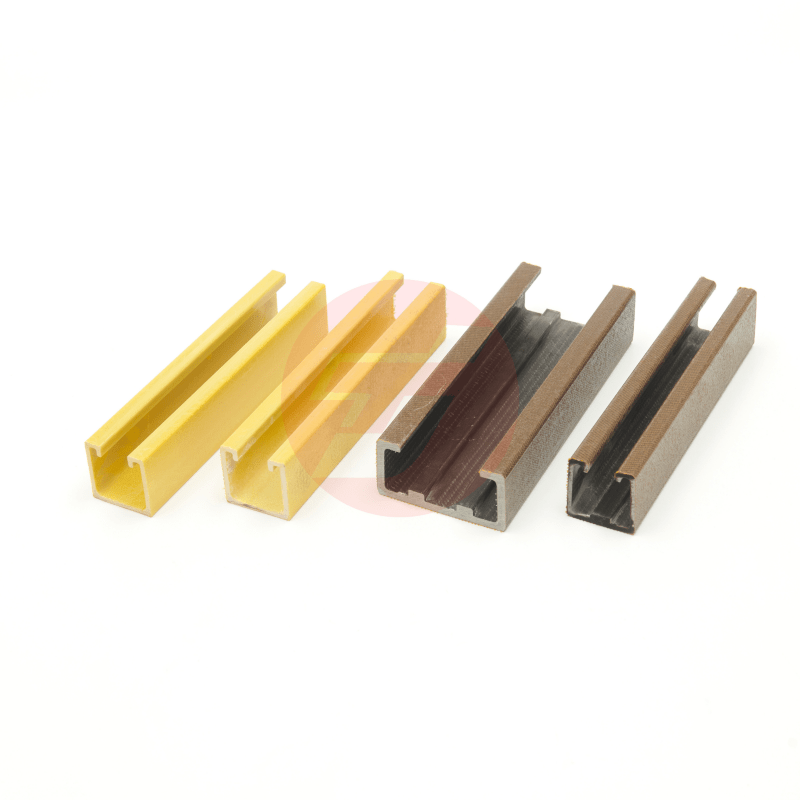
In the evolving landscape of industrial manufacturing and engineering, the shift from traditional materials such as steel, aluminum, and concrete toward lightweight composite products represents a fundamental transformation in how industries approach design, performance, and cost efficiency. This transition is not merely a trend but a strategic response to the increasing demands for materials that deliver superior strength-to-weight ratios, enhanced durability, and greater operational flexibility. Understanding why lightweight composite products consistently outperform traditional materials requires examining the fundamental material science principles, real-world performance metrics, and the economic realities that drive adoption across aerospace, automotive, construction, marine, and infrastructure sectors.
The performance advantages of lightweight composite products stem from their unique molecular architecture, which combines reinforcing fibers with polymer matrix systems to create materials that challenge conventional assumptions about the relationship between weight and structural capability. Traditional materials have served industries well for centuries, but they carry inherent limitations in density, corrosion resistance, and design flexibility that become increasingly problematic in modern applications where weight reduction directly translates to energy savings, extended service life, and enhanced operational capabilities. The compelling question is not whether composites offer advantages, but rather why these advantages prove so consistently superior across such diverse application environments, and what specific mechanisms enable these materials to deliver performance that traditional materials simply cannot match.
Superior Strength-to-Weight Performance Characteristics
Fundamental Material Property Advantages
The core reason why lightweight composite products outperform traditional materials lies in their exceptional strength-to-weight ratio, a critical performance metric that determines how much structural load a material can support relative to its mass. Carbon fiber reinforced composites, for instance, can achieve specific strength values that exceed high-strength steel by factors of three to five, meaning that a composite component can provide equivalent structural capacity while weighing only twenty to thirty percent as much as its steel counterpart. This dramatic difference emerges from the fundamental architecture of composite materials, where continuous high-strength fibers carry tensile loads while the matrix distributes stresses and protects the fibers from environmental damage. Glass fiber composites, while less expensive than carbon alternatives, still deliver specific strength values that surpass aluminum alloys by substantial margins, making them attractive for applications where moderate weight reduction justifies the material investment.
The directional nature of fiber reinforcement in lightweight composite products enables engineers to optimize material placement precisely where structural loads demand it, eliminating the excess material that isotropic traditional materials require for adequate safety margins. In a steel beam, material must be distributed uniformly regardless of actual stress distribution, resulting in significant weight inefficiency. Composite design allows strategic fiber orientation along primary load paths, placing reinforcement exactly where needed and minimizing material in low-stress regions. This anisotropic design capability translates directly into weight savings that traditional materials cannot achieve without compromising structural integrity. For applications ranging from aircraft fuselage panels to wind turbine blades, this ability to tailor material properties directionally represents a fundamental performance advantage that justifies the higher initial material costs through lifecycle value.
Real-World Performance Validation
Practical validation of why lightweight composite products outperform traditional materials comes from documented performance in demanding service environments. The aerospace industry provides perhaps the most rigorous testing ground, where composite primary structures in commercial aircraft have accumulated millions of flight hours demonstrating superior fatigue resistance compared to aluminum structures. Traditional aluminum airframes require extensive inspection protocols and part replacement schedules to manage fatigue crack propagation, while composite structures exhibit superior damage tolerance and fatigue life. The Boeing 787, with its composite fuselage and wing structures, achieves weight reductions exceeding twenty percent compared to equivalent aluminum designs, translating directly into fuel efficiency improvements and extended range capabilities that would be unattainable with traditional materials.
In marine applications, lightweight composite products demonstrate performance superiority through enhanced speed, fuel efficiency, and operational range. Naval vessels constructed with composite superstructures reduce topside weight, lowering the center of gravity and improving stability while enabling higher speeds with existing propulsion systems. Commercial vessels benefit from reduced fuel consumption, with composite hull construction delivering weight savings that translate into either increased cargo capacity or reduced operating costs. The U.S. Navy's extensive adoption of composites for minesweeper hulls and superstructure components validates the material's ability to meet stringent military specifications while delivering performance improvements impossible with steel or aluminum construction. These real-world deployments provide concrete evidence that composite performance advantages extend beyond laboratory testing into operational environments where material reliability directly impacts mission success and economic viability.
Enhanced Durability and Corrosion Resistance
Corrosion Immunity and Chemical Resistance
A fundamental reason why lightweight composite products outperform traditional materials involves their inherent immunity to electrochemical corrosion, eliminating one of the most significant lifecycle cost drivers affecting metallic structures. Steel and aluminum components require extensive protective coating systems, regular inspection, and eventual replacement due to corrosion damage that progressively degrades structural integrity. Marine environments, chemical processing facilities, and infrastructure exposed to deicing salts create particularly aggressive corrosion conditions where traditional materials demand constant maintenance intervention. Composite materials based on thermoset or thermoplastic matrices with glass or carbon fiber reinforcement exhibit no electrochemical corrosion, maintaining structural properties throughout service life without the protective coating systems that add cost, weight, and maintenance burden to traditional material solutions.
The chemical resistance of lightweight composite products extends beyond simple corrosion immunity to encompass resistance to a broad spectrum of industrial chemicals, solvents, and environmental contaminants that attack traditional materials. Fiberglass reinforced polymer systems demonstrate exceptional resistance to acids, bases, and organic solvents, making them preferred materials for chemical storage tanks, processing equipment, and piping systems where steel would require expensive corrosion-resistant alloys or frequent replacement. This chemical durability translates into extended service life, reduced maintenance costs, and elimination of product contamination risks that can occur when traditional materials degrade in aggressive chemical environments. For lightweight composite products in infrastructure applications such as bridge decks, reinforcing bars, and utility poles, corrosion immunity represents a decisive performance advantage that fundamentally alters lifecycle economics compared to steel or concrete alternatives.
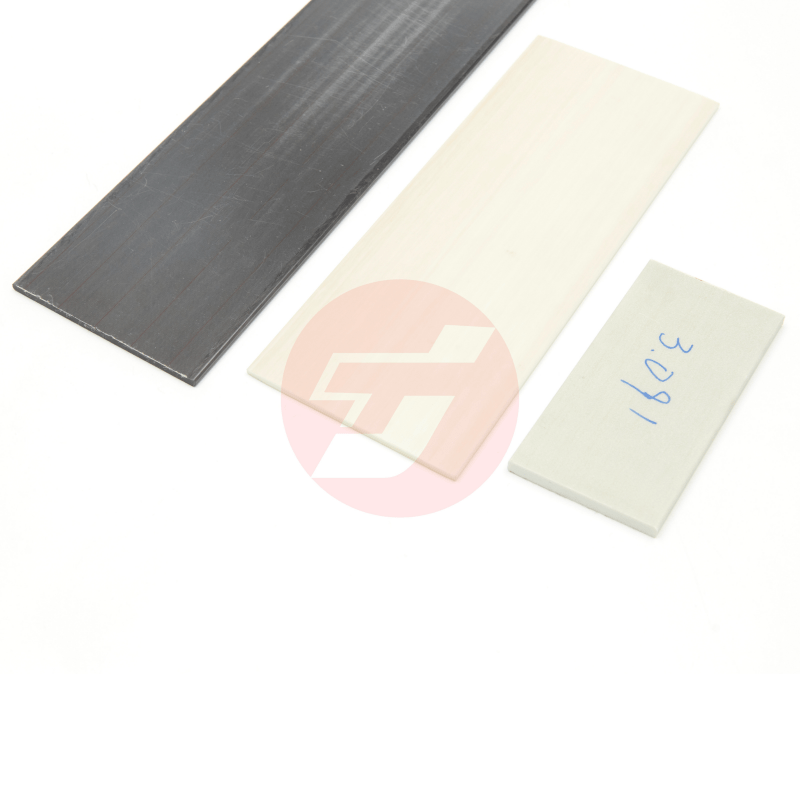
Environmental Durability and Weathering Resistance
Outdoor exposure presents severe challenges for traditional materials, with ultraviolet radiation, thermal cycling, moisture absorption, and biological attack causing progressive degradation that limits service life and necessitates protective measures. Wood requires preservative treatment and periodic refinishing to prevent decay and insect damage. Steel structures demand continuous coating maintenance to prevent rust. Concrete suffers from freeze-thaw damage, alkali-aggregate reactions, and reinforcement corrosion that lead to spalling and structural deterioration. Lightweight composite products formulated with appropriate resin systems and UV stabilizers maintain structural and aesthetic properties through decades of outdoor exposure with minimal maintenance intervention, delivering lifecycle performance that traditional materials cannot match without substantial ongoing investment in protective treatments and repairs.
The dimensional stability of lightweight composite products under environmental exposure represents another critical performance advantage over traditional materials. Wood expands and contracts with moisture changes, leading to warping, splitting, and fastener loosening. Metals undergo thermal expansion that requires accommodation through expansion joints and can cause buckling or distortion. Composite materials exhibit low coefficients of thermal expansion, particularly when fiber orientation is optimized for dimensional stability, maintaining precise tolerances across wide temperature ranges. This stability proves essential in applications such as precision equipment housings, antenna structures, and architectural panels where dimensional changes would compromise performance or aesthetics. The combination of corrosion immunity, chemical resistance, and environmental durability creates a compelling value proposition that explains why lightweight composite products increasingly displace traditional materials in applications where lifecycle cost and reliability outweigh initial material expense.
Design Flexibility and Manufacturing Efficiency
Complex Geometry and Integrated Structures
The ability to create complex geometries with integrated functionality represents a profound advantage that explains why lightweight composite products outperform traditional materials in applications demanding sophisticated component design. Traditional manufacturing approaches require assembling multiple discrete parts through mechanical fastening or welding, creating joints that introduce weight penalties, stress concentrations, and potential failure points. Composite manufacturing processes such as filament winding, resin transfer molding, and pultrusion enable production of seamless structures that integrate multiple functional elements into single components without mechanical joints. An automotive driveshaft manufactured as a single composite tube replaces a multi-piece steel assembly, eliminating joint weight and rotational imbalance while improving torsional stiffness and reducing vibration.
The net-shape manufacturing capability of lightweight composite products reduces or eliminates secondary machining operations that add cost and waste material in traditional metalworking. A complex composite structure can be molded to final dimensions incorporating mounting features, stiffening ribs, and functional attachments as integral elements of the component rather than requiring separate fabrication and assembly operations. This manufacturing integration translates into part count reduction, simplified assembly processes, and lower total production costs despite higher raw material prices. Aerospace manufacturers exploit this capability extensively, creating complex composite structures such as wing panels and fuselage sections that would require hundreds of individual metal parts and thousands of fasteners if manufactured with traditional materials. The resulting weight savings, assembly labor reduction, and elimination of fastener-induced stress concentrations deliver performance improvements that justify composite adoption even in cost-sensitive applications.
Rapid Prototyping and Design Iteration
Modern composite manufacturing technologies enable rapid prototyping and design iteration cycles that accelerate product development compared to traditional material approaches requiring extensive tooling investment. Additive manufacturing techniques adapted for continuous fiber composites allow direct fabrication of functional prototypes from digital models, compressing development timelines from months to weeks. Low-pressure molding processes such as vacuum infusion require relatively inexpensive tooling compared to the forging dies, stamping presses, and machining fixtures needed for traditional metal fabrication, reducing financial barriers to design experimentation and customization. This development agility proves particularly valuable in industries facing rapid technological change or requiring customized solutions for specific application requirements where traditional manufacturing economics penalize small production volumes.
The material versatility inherent in lightweight composite products enables performance optimization through systematic variation of fiber types, orientations, and matrix systems without fundamental changes to manufacturing processes. Engineers can tune mechanical properties, thermal characteristics, and electrical behavior by adjusting composite architecture rather than switching to entirely different material systems as would be necessary with traditional materials. A single manufacturing process such as pultrusion can produce structural profiles ranging from highly flexible to extremely rigid simply by varying fiber content and orientation, providing design flexibility that metalworking or concrete casting cannot match. This adaptability explains why lightweight composite products increasingly serve as preferred solutions in applications requiring customized performance characteristics or rapid response to evolving technical requirements.
Economic Performance and Lifecycle Value
Total Cost of Ownership Analysis
Understanding why lightweight composite products outperform traditional materials requires moving beyond initial material costs to comprehensive lifecycle economic analysis that accounts for installation expenses, maintenance requirements, operational costs, and end-of-service disposal or recycling considerations. While raw material costs for composites typically exceed those of steel, aluminum, or concrete, the installed cost comparison often favors composites when transportation, handling, and installation labor are considered. A composite bridge deck panel weighing one-quarter as much as a concrete equivalent requires smaller cranes, fewer workers, and shorter installation windows, reducing construction costs and traffic disruption expenses that can dwarf material price differences. The extended service life and minimal maintenance requirements of composite structures further improve lifecycle economics, eliminating the recurring costs of painting, corrosion repair, and component replacement that burden traditional material installations.
Operational cost savings provide compelling economic justification for lightweight composite products in transportation applications where weight directly impacts fuel consumption. The aerospace industry accepts significantly higher material costs for composites because weight reduction delivers fuel savings that accumulate over the aircraft's service life to values far exceeding the initial material premium. Automotive applications follow similar logic, with composite body panels and structural components enabling vehicle weight reduction that improves fuel efficiency and reduces emissions to meet increasingly stringent regulatory requirements. Electric vehicles benefit particularly from composite weight savings because reduced mass directly extends battery range, addressing a critical performance limitation that constrains market adoption. These operational economics explain why industries with high fuel costs or strict efficiency requirements adopt lightweight composite products despite premium material pricing.
Risk Mitigation and Performance Reliability
The predictable long-term performance of lightweight composite products reduces business risk compared to traditional materials subject to unpredictable corrosion damage, fatigue failures, and environmental degradation. Infrastructure owners face substantial financial uncertainty when traditional material structures require unexpected repairs or premature replacement due to corrosion or deterioration. Composite structures with documented corrosion immunity and superior fatigue resistance enable more accurate lifecycle cost projections and reduce the probability of catastrophic failures that impose enormous economic and safety costs. This performance reliability translates into reduced insurance premiums, lower contingency reserves, and improved project financing terms that enhance overall project economics beyond simple material cost comparisons.
The lightweight nature of composite products reduces foundation requirements and structural support costs in buildings and civil infrastructure, creating indirect economic benefits that often justify material selection. A composite pedestrian bridge requires simpler foundations than a steel equivalent due to reduced dead load, lowering total project costs despite higher deck material expenses. Building facades constructed with lightweight composite products impose lower loads on the structural frame, potentially enabling column and foundation downsizing that offsets panel costs. These system-level economic benefits explain why sophisticated project economics increasingly favor lightweight composite products even when isolated material cost comparisons might suggest traditional material advantages. The comprehensive value proposition encompassing initial costs, lifecycle expenses, operational savings, and risk mitigation creates compelling economic logic that drives composite adoption across diverse industrial sectors.
Application-Specific Performance Advantages
Infrastructure and Construction Applications
Civil infrastructure represents a massive application domain where lightweight composite products demonstrate clear performance superiority over traditional materials in addressing the deterioration crisis affecting bridges, utilities, and public facilities. Corrosion of steel reinforcement in concrete structures constitutes the primary cause of infrastructure degradation, with repair and replacement costs exceeding hundreds of billions of dollars globally. Composite reinforcing bars and structural elements eliminate this degradation mechanism entirely, extending structure service life from decades to potentially a century or more without corrosion-related deterioration. Bridge decks constructed with composite panels weigh substantially less than concrete equivalents, enabling rehabilitation of aging bridges without foundation strengthening while improving load capacity and extending structure life. Utility poles manufactured from pultruded composite profiles resist rot, insect damage, and weathering that limit wood pole life while avoiding the weight and corrosion issues of steel or concrete alternatives.
The rapid installation capability enabled by lightweight composite products addresses critical infrastructure maintenance challenges where construction time directly impacts public disruption and economic losses. Composite bridge deck replacement can occur during overnight closure windows impossible with concrete construction requiring extended curing times. The reduced weight simplifies handling and installation logistics, often eliminating lane closures and traffic detours that impose substantial indirect costs on traditional material projects. Seismic retrofit applications benefit from composite strengthening systems that add minimal weight while substantially improving structure resilience, avoiding the foundation upgrades that traditional strengthening approaches would require. These practical advantages explain the accelerating adoption of lightweight composite products in infrastructure despite institutional conservatism and initial cost considerations that historically favored traditional materials.
Industrial Equipment and Manufacturing Systems
Manufacturing equipment and industrial machinery increasingly incorporate lightweight composite products to achieve performance improvements impossible with traditional materials. Robotic arms constructed with carbon fiber composites move faster and position more accurately than steel equivalents due to reduced inertia, improving production throughput and precision. Composite tooling for aerospace manufacturing maintains dimensional stability across temperature cycles while weighing substantially less than metallic tooling, reducing handling equipment requirements and improving worker safety. Chemical processing equipment fabricated from corrosion-resistant composites eliminates contamination risks and maintenance costs associated with metal corrosion, improving product quality and operational reliability. High-speed rotating equipment such as centrifuges and flywheels exploit the superior strength-to-weight ratio of lightweight composite products to achieve rotational speeds impossible with traditional materials limited by centrifugal stress.
The electrical properties of lightweight composite products enable applications where traditional conductive materials create unacceptable electromagnetic interference or electrical hazard risks. Composite structures for electrical utility applications provide necessary mechanical strength while maintaining electrical insulation, improving safety and enabling compact designs. Medical imaging equipment benefits from composite construction that provides structural rigidity without interfering with magnetic fields or X-ray transmission. Telecommunications infrastructure uses composite radomes and antenna supports that provide weather protection and structural support without degrading signal transmission. These specialized applications demonstrate how the unique property combinations available in lightweight composite products create performance opportunities that traditional materials simply cannot address, explaining adoption in niche markets where material costs represent minor considerations compared to functional requirements.
FAQ
What makes lightweight composite products stronger than traditional materials despite weighing less?
Lightweight composite products achieve superior strength-to-weight ratios through their fundamental architecture, which combines high-strength continuous fibers such as carbon or glass with polymer matrix systems that protect and support the fibers. The fibers themselves possess tensile strength values exceeding steel by substantial margins when measured per unit mass. The matrix distributes loads among fibers and prevents buckling, enabling the composite to realize the fiber's full strength potential. Additionally, the directional nature of fiber reinforcement allows engineers to orient fibers along primary load paths, placing material precisely where structural demands require it rather than distributing material uniformly as isotropic traditional materials necessitate. This strategic material placement eliminates the excess weight that conventional materials require for adequate safety margins, resulting in components that provide equivalent or superior structural performance while weighing a fraction of traditional material alternatives.
How do lightweight composite products reduce long-term maintenance costs compared to steel or aluminum?
The corrosion immunity of lightweight composite products eliminates the single largest maintenance cost driver affecting traditional metallic structures. Steel and aluminum require protective coating systems that must be periodically renewed, along with regular inspection for corrosion damage and eventual component replacement as degradation progresses. Composites based on polymer matrices with glass or carbon reinforcement exhibit no electrochemical corrosion, maintaining structural integrity throughout service life without protective coatings or corrosion-related repairs. This fundamental material characteristic translates into dramatically reduced lifecycle costs, particularly in corrosive environments such as marine applications, chemical facilities, and infrastructure exposed to deicing salts. Additionally, the superior fatigue resistance of composite materials reduces inspection frequency and eliminates replacement cycles driven by fatigue crack propagation in metals. The combination of corrosion immunity, chemical resistance, and fatigue durability creates maintenance cost savings that often exceed initial material price premiums within the first decade of service, delivering compelling economic value over structure lifecycles measured in decades.
Can lightweight composite products be effectively recycled or disposed of at end of service life?
End-of-life management for lightweight composite products has improved substantially with developing recycling technologies and circular economy approaches, though challenges remain compared to traditional metals. Mechanical recycling processes grind composite scrap into fiber-reinforced fillers suitable for injection molding compounds and low-stress applications, recovering material value while diverting waste from landfills. Thermal recycling methods such as pyrolysis recover clean fibers and energy value from the matrix, producing reclaimed fibers with properties approaching virgin material performance. Chemical recycling dissolves the matrix to recover intact fibers and chemical feedstocks, enabling closed-loop material systems for certain composite chemistries. While these technologies continue maturing toward economic viability at scale, composite recycling capabilities have advanced significantly beyond the historical practice of landfill disposal. Additionally, the extended service life of composite structures means replacement cycles occur far less frequently than with traditional materials subject to corrosion and fatigue, reducing the absolute volume of end-of-life material requiring management. Current best practices emphasize design for disassembly, material identification systems, and collection infrastructure development to support emerging recycling capabilities and minimize environmental impact throughout the composite product lifecycle.
Are there applications where traditional materials still outperform lightweight composite products?
Traditional materials retain advantages in specific application contexts where their properties align well with requirements and economic constraints. High-temperature applications exceeding approximately 150 to 200 degrees Celsius generally favor metals because standard polymer matrix composites soften and lose mechanical properties at elevated temperatures, though specialized high-temperature composite systems continue expanding the temperature envelope. Applications requiring electrical or thermal conductivity benefit from metals' superior conductive properties, unless specialized conductive composite formulations justify their added cost. Very high-volume commodity applications with extreme cost sensitivity often favor traditional materials where manufacturing scale and material costs dominate economics. Structural applications requiring isotropic properties benefit from metals' uniform behavior in all directions, avoiding the directional property variations inherent in fiber-reinforced composites. Repair and field modification scenarios favor traditional materials with established joining and repair procedures familiar to general trades rather than composite-specific techniques requiring specialized training. However, the application domain where lightweight composite products demonstrate clear performance advantages continues expanding as material costs decline, manufacturing processes mature, design expertise proliferates, and lifecycle value considerations increasingly influence material selection decisions beyond initial cost comparisons.
Table of Contents
- Superior Strength-to-Weight Performance Characteristics
- Enhanced Durability and Corrosion Resistance
- Design Flexibility and Manufacturing Efficiency
- Economic Performance and Lifecycle Value
- Application-Specific Performance Advantages
-
FAQ
- What makes lightweight composite products stronger than traditional materials despite weighing less?
- How do lightweight composite products reduce long-term maintenance costs compared to steel or aluminum?
- Can lightweight composite products be effectively recycled or disposed of at end of service life?
- Are there applications where traditional materials still outperform lightweight composite products?