
 EN
EN
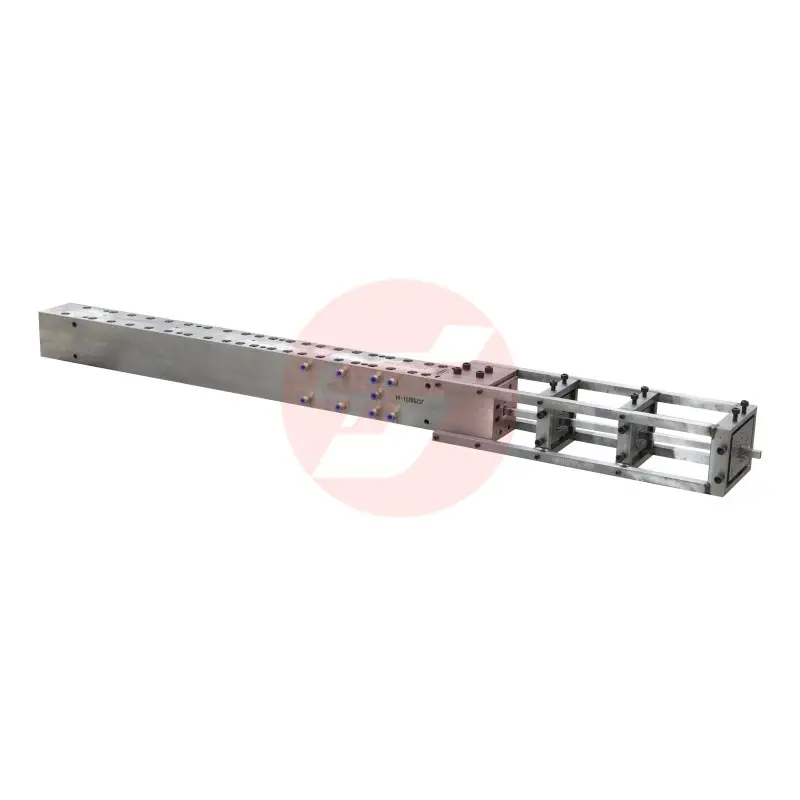
Production efficiency in polyurethane pultrusion molding directly impacts manufacturing costs, output volume, and competitive positioning in the composite materials industry. Evaluating the production efficiency of polyurethane pultrusion molds requires a systematic approach that examines cycle times, dimensional consistency, defect rates, energy consumption, and operational uptime. For manufacturers working with continuous fiber-reinforced profiles, understanding these performance metrics enables data-driven decisions about mold design optimization, process parameter adjustments, and equipment investment strategies. The evaluation process must account for both quantitative production data and qualitative indicators that reveal long-term durability and maintenance requirements of the molding systems.
The performance of polyurethane pultrusion molds determines not only the speed of profile production but also the material waste ratios, surface finish quality, and operational stability across extended production runs. Unlike metal extrusion or traditional thermoset pultrusion systems, polyurethane-based molds present unique thermal management challenges and cure behavior patterns that must be precisely monitored. Efficiency evaluation frameworks must therefore integrate thermal profiling data, pull force measurements, resin consumption analytics, and post-cure shrinkage assessments. This comprehensive analysis allows production managers to identify bottlenecks, optimize resin formulation compatibility, and establish realistic throughput benchmarks that align with market demand and quality standards.
Measuring Cycle Time and Throughput Capacity
Defining Effective Cycle Time Parameters
Cycle time represents the fundamental efficiency metric for polyurethane pultrusion molds, calculated as the elapsed duration from resin injection initiation to profile emergence at the specified pull rate. This metric encompasses resin impregnation time, gel point transition, exothermic curing phase, and cooling stabilization before the profile exits the heated die zone. For polyurethane pultrusion molds, cycle times typically range from continuous operation modes where pulling occurs at constant velocity to semi-continuous batches where periodic stops accommodate resin mixing or fiber repositioning. Accurate cycle time measurement requires synchronized data capture across resin pump flow rates, pulling mechanism encoder signals, and temperature controller feedback loops to isolate actual productive time from setup delays or quality hold periods.
Production teams should differentiate between theoretical cycle time based on design specifications and actual observed cycle time under real manufacturing conditions. The gap between these values reveals operational inefficiencies such as inadequate resin preheating, insufficient clamping pressure causing flash formation, or thermal lag in temperature control systems. High-performance polyurethane pultrusion molds maintain cycle time consistency within narrow tolerances, typically less than five percent variation across consecutive production runs. Establishing cycle time baselines through statistical process control enables comparison across different mold designs, resin formulations, and fiber reinforcement architectures to identify optimal configuration parameters.
Calculating Linear Pull Rate and Output Volume
Linear pull rate, measured in meters per minute or feet per hour, directly correlates with production output volume when combined with profile cross-sectional dimensions and material density calculations. For polyurethane pultrusion molds, sustainable pull rates depend on resin cure kinetics, thermal conductivity of the mold material, and mechanical strength development sufficient to withstand pulling forces without profile distortion. Typical industrial pull rates for polyurethane systems range from 0.3 to 1.5 meters per minute depending on profile complexity, wall thickness, and fiber volume fraction. Evaluating pull rate efficiency requires monitoring the maximum achievable speed before defects such as incomplete cure, fiber misalignment, or surface porosity begin to appear.
Output volume calculations must account for production interruptions including mold cleaning intervals, resin batch changeovers, and scheduled maintenance downtimes that reduce effective operating hours. Manufacturers should calculate both gross output based on continuous operation assumptions and net output reflecting realistic duty cycles with typical interruption patterns. Advanced polyurethane pultrusion molds incorporate quick-release mechanisms and self-cleaning surface treatments that minimize downtime between production runs, directly enhancing net throughput capacity. Benchmark comparisons should normalize output metrics to standardized profile dimensions and operating shift patterns to enable meaningful cross-facility or cross-technology assessments.
Analyzing Production Bottlenecks and Constraint Points
Systematic bottleneck analysis identifies which process stage limits overall throughput in polyurethane pultrusion operations. Common constraint points include resin mixing and degassing capacity, fiber creel tension control inconsistencies, inadequate heating power for rapid cure activation, and insufficient cooling capacity for dimensional stabilization. Time-motion studies combined with process flow mapping reveal where material queuing occurs and which operations consume disproportionate cycle time. For polyurethane pultrusion molds, thermal management frequently emerges as the primary bottleneck since polyurethane cure reactions generate significant exothermic heat that must be carefully controlled to prevent thermal runaway while maintaining sufficient temperature for complete crosslinking.
Debottlenecking strategies for polyurethane pultrusion molds often focus on upgrading heating systems to provide faster ramp rates and more uniform temperature distribution across the die length. Installing additional cooling zones downstream of the primary cure section enables faster pull rates by accelerating profile solidification to handling strength. Process simulation software can model the impact of various bottleneck elimination approaches before committing capital investment, testing scenarios such as increased resin preheating, modified die geometry for improved resin flow, or enhanced fiber pre-forming equipment. Continuous bottleneck monitoring through production data analytics ensures efficiency improvements are sustained and new constraints are identified as production conditions evolve.
Assessing Product Quality Consistency and Defect Rates
Establishing Dimensional Tolerance Compliance Metrics
Dimensional accuracy represents a critical efficiency indicator for polyurethane pultrusion molds since dimensional deviations necessitate rework, generate scrap, and reduce effective throughput. Key dimensional parameters include cross-sectional profile geometry, wall thickness uniformity, straightness along the longitudinal axis, and surface finish smoothness. High-efficiency polyurethane pultrusion molds consistently produce profiles within tolerance specifications across thousands of linear meters without requiring die adjustments or process parameter modifications. Statistical process control charts tracking dimensional variation over time reveal whether the mold design provides adequate dimensional stability or whether thermal expansion, wear patterns, or resin viscosity changes are causing progressive dimensional drift.
Tolerance compliance evaluation should employ automated measurement systems that capture dimensional data at regular intervals without disrupting production flow. Laser scanning systems, coordinate measuring machines adapted for continuous profiles, and vision-based measurement platforms provide objective dimensional verification that eliminates subjective operator judgments. For polyurethane pultrusion molds, post-cure shrinkage represents an additional dimensional consideration since polyurethane chemistry may exhibit continued crosslinking reactions after profile exit from the heated die. Efficiency assessments must therefore include dimensional stability measurements conducted at multiple time points after production to ensure delivered profiles meet customer specifications throughout their service life.
Quantifying Surface Finish Quality and Visual Defect Frequency
Surface finish quality directly affects downstream processing requirements and end-use performance of pultruded profiles, making it a vital efficiency metric for polyurethane pultrusion molds. Surface defects including resin-rich or resin-starved areas, fiber exposure, waviness, discoloration, and residual mold release agent contamination reduce product value and may require costly finishing operations. Quantitative surface assessment employs gloss meters, surface roughness profilometers, and digital image analysis systems that assign numerical values to subjective appearance characteristics. Production efficiency calculations should incorporate the percentage of profiles meeting Class A surface specifications without secondary finishing operations.
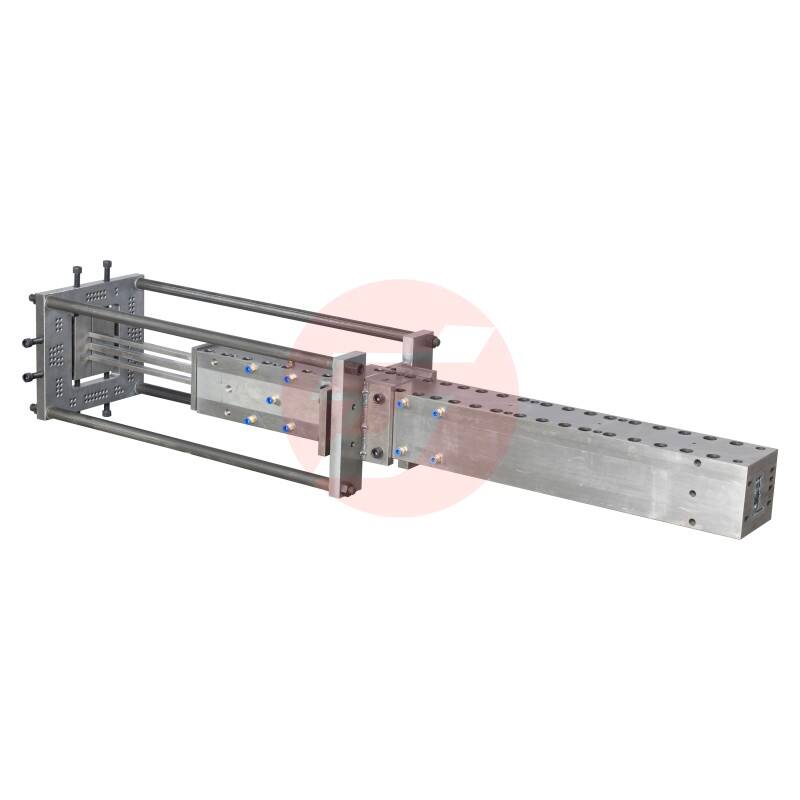
Tracking defect frequency per unit length produced provides actionable data for identifying mold design weaknesses or process control gaps affecting surface quality. For polyurethane pultrusion molds, surface defects often originate from inadequate mold release effectiveness, improper resin-to-fiber ratio, or temperature gradients causing differential cure rates across the profile cross-section. Implementing automated surface inspection systems with defect classification algorithms enables real-time quality monitoring and immediate process adjustments when defect rates exceed acceptable thresholds. Correlating surface defect patterns with specific mold zones or operating parameters guides targeted improvements that enhance both quality and efficiency simultaneously.
Monitoring Mechanical Property Consistency Across Production Runs
Mechanical property verification ensures that polyurethane pultrusion molds produce profiles with consistent structural performance suitable for demanding applications. Key mechanical properties include flexural strength and modulus, tensile strength, interlaminar shear strength, and impact resistance. While destructive testing cannot be performed on every profile, statistical sampling protocols with documented test frequency and acceptance criteria provide confidence in overall production quality. Mechanical property variation exceeding specification ranges indicates process instability that reduces effective production efficiency by increasing rejection rates and requiring investigation time.
For polyurethane pultrusion molds, cure completeness directly influences mechanical performance, making cure monitoring an essential efficiency evaluation component. Differential scanning calorimetry analysis of profile samples reveals whether exothermic cure reactions reached completion or whether residual unreacted groups remain that could compromise long-term mechanical stability. Dynamic mechanical analysis provides additional insight into glass transition temperature and crosslink density uniformity. Establishing mechanical property control charts with upper and lower specification limits enables rapid identification of process deviations requiring corrective action before substantial scrap accumulation occurs, thereby protecting production efficiency.
Evaluating Energy Consumption and Operating Cost Efficiency
Analyzing Thermal Energy Requirements for Cure Activation
Thermal energy consumption represents a major operating cost component for polyurethane pultrusion molds, making energy efficiency a critical evaluation metric. The cure reaction of polyurethane systems requires precise temperature control to initiate crosslinking while managing exothermic heat release. Mold heating systems typically consume between two and five kilowatts per linear meter of heated die length, with actual consumption varying based on profile mass, production speed, and ambient conditions. Energy-efficient polyurethane pultrusion molds incorporate thermal insulation, heat recovery systems, and intelligent temperature control algorithms that minimize energy waste while maintaining optimal cure conditions.
Specific energy consumption, calculated as kilowatt-hours per kilogram of finished profile, provides a normalized metric for comparing energy efficiency across different polyurethane pultrusion molds and production conditions. Monitoring instantaneous power draw during different production phases reveals whether heating systems are properly sized or whether excessive capacity leads to cycling inefficiency. Advanced mold designs utilize zoned heating with independent temperature control for preheating, primary cure, and post-cure regions, allowing optimization of energy delivery to match actual thermal requirements at each process stage. Energy audits identifying opportunities for waste heat recovery or insulation improvements directly enhance cost efficiency without compromising production quality.
Calculating Material Utilization and Waste Reduction Metrics
Material utilization efficiency measures how effectively polyurethane pultrusion molds convert raw materials into saleable products versus generating scrap or waste. Key material streams include polyurethane resin systems, fiber reinforcements, mold release agents, and packaging materials. High-efficiency molds minimize startup scrap during initial production stabilization, reduce trim waste from profile ends, and prevent resin leakage or fiber damage during processing. Calculating material yield as the ratio of finished product weight to total raw material input provides an overall efficiency indicator, with leading operations achieving yields exceeding ninety-five percent.
For polyurethane pultrusion molds, resin consumption accuracy depends on precise metering pump calibration and proper resin-to-fiber ratio control throughout production runs. Excess resin application increases material costs without improving product performance while insufficient resin creates dry spots and mechanical property deficiencies. Implementing closed-loop resin delivery systems with real-time flow monitoring ensures optimal material utilization. Fiber waste reduction strategies include optimized creel layouts that minimize fiber breakage, proper tension control preventing fiber buckling, and efficient trim recovery systems that enable recycling of scrap material into lower-grade applications rather than landfill disposal.
Assessing Maintenance Requirements and Equipment Reliability
Maintenance frequency and associated downtime directly impact the effective production efficiency of polyurethane pultrusion molds. Reliability metrics including mean time between failures, planned maintenance intervals, and repair duration quantify how consistently molds maintain operational availability. High-quality polyurethane pultrusion molds incorporate wear-resistant materials in high-stress zones, corrosion-resistant coatings protecting against chemical attack from resin components, and modular designs enabling rapid component replacement without complete system disassembly. Tracking maintenance labor hours and spare parts consumption per unit of production provides insight into total cost of ownership beyond initial capital investment.
Predictive maintenance approaches utilizing vibration monitoring, thermal imaging, and automated wear measurement extend equipment life while reducing unplanned downtime. For polyurethane pultrusion molds, critical wear points include die surfaces contacting the moving profile, heating element integrity, and pulling mechanism components subjected to continuous mechanical stress. Establishing condition-based maintenance protocols that trigger service activities based on actual wear indicators rather than arbitrary time intervals optimizes maintenance efficiency. Comprehensive maintenance data analysis reveals whether specific mold design features contribute to premature wear, guiding design improvements in subsequent tooling generations.
Implementing Process Monitoring and Control Systems
Deploying Real-Time Temperature Profiling Technology
Temperature distribution throughout polyurethane pultrusion molds critically influences cure uniformity, cycle time, and product quality, making continuous temperature monitoring essential for efficiency evaluation. Multi-zone temperature control systems with thermocouples positioned at strategic die locations provide feedback for maintaining optimal thermal profiles. Advanced installations incorporate infrared thermal imaging cameras that create continuous temperature maps of the die surface and emerging profile, revealing hot spots, cold zones, or thermal gradients exceeding design specifications. Real-time temperature data logging enables correlation analysis between thermal conditions and quality outcomes, supporting process optimization efforts.
For polyurethane pultrusion molds, the exothermic nature of the cure reaction requires careful thermal management to prevent localized overheating that could degrade resin properties or cause dimensional distortion. Temperature profiling should capture both die surface temperatures and internal profile core temperatures when feasible, since thermal lag between surface and core affects cure completeness. Implementing automated temperature control algorithms that adjust heating power based on production speed and ambient conditions maintains consistent cure conditions despite varying external factors. Historical temperature data analysis identifies trends indicating potential heating element degradation or insulation deterioration requiring preventive maintenance.
Integrating Pull Force Monitoring for Process Stability Assessment
Pull force measurement provides direct insight into friction conditions within polyurethane pultrusion molds and cure state development during profile formation. Load cells installed in the pulling mechanism continuously record the tensile force required to draw the profile through the heated die. Stable pull force readings within expected ranges indicate consistent processing conditions, while sudden force increases may signal inadequate mold release, resin accumulation on die surfaces, or premature cure blocking proper material flow. Pull force trending analysis reveals gradual changes indicating progressive die wear or contamination buildup requiring cleaning intervention.
Establishing pull force specifications based on profile geometry, reinforcement architecture, and resin viscosity characteristics enables automated alarming when forces exceed acceptable limits. For polyurethane pultrusion molds, pull force typically increases gradually during the initial cure phase as material stiffness develops, then stabilizes once the profile achieves sufficient strength for self-supporting extraction. Abnormal pull force patterns such as oscillations or stepwise changes indicate process instabilities requiring investigation. Correlating pull force data with quality measurements identifies force thresholds associated with defect formation, enabling proactive process adjustments before quality issues manifest in finished products.
Utilizing Data Analytics for Continuous Improvement Initiatives
Comprehensive data collection from polyurethane pultrusion molds enables advanced analytics that identify efficiency improvement opportunities not apparent through manual observation. Manufacturing execution systems integrate data streams from temperature controllers, pulling mechanisms, resin delivery pumps, and quality inspection equipment into unified databases supporting statistical analysis. Multivariate analysis techniques reveal which process parameters most significantly influence key performance indicators such as cycle time, defect rates, or energy consumption. Predictive modeling based on historical production data forecasts optimal operating conditions for specific product configurations.
Machine learning algorithms applied to polyurethane pultrusion mold data can automatically detect subtle process drift patterns preceding quality issues, enabling intervention before defective production occurs. Digital twin simulations combining process models with real-time sensor data allow virtual testing of process changes before implementation, reducing experimental costs and production disruptions. Continuous improvement programs built on data-driven decision making systematically enhance production efficiency through incremental optimization cycles. Benchmarking current performance against historical best-case scenarios or industry standards quantifies improvement opportunities and guides resource allocation for maximum efficiency gains.
Comparing Performance Across Different Mold Configurations
Evaluating Single-Cavity Versus Multi-Cavity Designs
Mold configuration choices significantly impact production efficiency for polyurethane pultrusion operations. Single-cavity molds producing one profile per cycle offer simplicity in setup and temperature control but limit throughput capacity. Multi-cavity designs simultaneously produce multiple profiles, multiplying output volume without proportionally increasing equipment footprint or energy consumption. However, multi-cavity polyurethane pultrusion molds introduce complexity in maintaining uniform processing conditions across all cavities, requiring sophisticated temperature control and fiber tensioning systems to ensure consistent quality. Efficiency evaluations must weigh the higher initial investment and operational complexity of multi-cavity systems against the substantially increased production capacity.
For polyurethane pultrusion molds, thermal management challenges intensify with multi-cavity configurations due to heat accumulation from multiple simultaneous exothermic reactions. Die design must incorporate adequate cooling channels and thermal barriers preventing cross-talk between adjacent cavities. Quality consistency across cavities represents a critical efficiency metric, since significant variation between cavities reduces the effective yield benefit of multi-cavity production. Comparative testing between single and multi-cavity polyurethane pultrusion molds should measure not only gross output differences but also quality uniformity, setup time requirements, and maintenance complexity to determine true efficiency advantages under specific production scenarios.
Assessing Modular Versus Monolithic Mold Architectures
Modular mold designs featuring interchangeable die sections offer flexibility advantages for manufacturers producing diverse profile geometries with polyurethane pultrusion processes. Quick-change tooling systems reduce setup time when transitioning between product variants, increasing equipment utilization efficiency. Modular approaches also enable targeted maintenance or replacement of worn sections without complete mold replacement, potentially reducing long-term ownership costs. However, modular interfaces introduce additional potential leak paths for resin escape and may create thermal discontinuities affecting cure uniformity if not carefully engineered.
Monolithic mold constructions provide maximum structural rigidity and thermal uniformity, beneficial for high-volume production of standardized profiles. For polyurethane pultrusion molds, monolithic designs simplify sealing requirements and eliminate potential weak points associated with modular joints. Efficiency comparisons must account for the specific production mix and changeover frequency characteristic of each operation. Facilities producing long runs of identical profiles benefit from monolithic mold efficiency, while job shops handling frequent product changes realize greater value from modular flexibility. Hybrid approaches combining modular end sections with monolithic core regions attempt to balance these competing priorities.
Analyzing Material Selection Impact on Thermal Performance
Mold material selection profoundly influences thermal efficiency and production performance of polyurethane pultrusion molds. Steel construction offers excellent durability and thermal conductivity enabling uniform heat distribution, but requires substantial heating power due to high thermal mass. Aluminum molds reduce thermal mass and improve thermal response speed, potentially enabling faster cycling, but may exhibit reduced wear resistance in abrasive fiber environments. Advanced materials including ceramic-coated metals or composite tool materials offer specialized performance characteristics balancing thermal properties with mechanical durability.
For polyurethane pultrusion molds, surface treatments and coatings significantly impact operational efficiency through improved release characteristics and extended die life. Chrome plating, nickel-based coatings, and specialized polymer release layers reduce friction and prevent resin adhesion. Efficiency evaluations should include long-term testing under production conditions to assess coating durability and release effectiveness degradation over time. Thermal conductivity analysis using finite element modeling can predict temperature distribution patterns for different material combinations, guiding material selection decisions based on specific profile requirements and production volume targets. Investment analysis comparing higher-performance materials against operational cost savings and extended service life determines optimal material specifications for particular applications.
FAQ
What production rate should I expect from high-efficiency polyurethane pultrusion molds?
High-efficiency polyurethane pultrusion molds typically achieve linear pull rates between 0.5 and 1.2 meters per minute depending on profile complexity and cross-sectional dimensions. For simple constant-thickness profiles, rates approaching 1.5 meters per minute are achievable with optimized resin formulations and advanced temperature control systems. Complex geometries with varying wall thicknesses or intricate shapes require slower rates to ensure complete cure and dimensional accuracy. Actual production rates depend significantly on profile mass per linear meter, fiber volume fraction, and required surface finish quality. Operational efficiency also depends on minimizing non-productive time through quick changeover systems and preventive maintenance scheduling.
How does mold temperature uniformity affect production efficiency?
Temperature uniformity across the die length and around the profile circumference critically determines cure consistency and defect prevention in polyurethane pultrusion processes. Temperature variations exceeding five degrees Celsius can create differential cure rates leading to internal stresses, warping, or incomplete crosslinking in cooler zones. Non-uniform heating reduces maximum sustainable pull rates since processing speed must be limited by the slowest-curing region. Advanced mold designs incorporate multiple heating zones with independent control and strategic placement of heating elements to compensate for heat loss patterns and exothermic reaction distribution. Thermal imaging verification during commissioning and periodic requalification ensures temperature specifications are maintained throughout the mold service life.
What maintenance intervals optimize long-term efficiency for polyurethane pultrusion molds?
Preventive maintenance scheduling for polyurethane pultrusion molds should balance minimizing unplanned downtime against avoiding excessive intervention that disrupts production. Typical maintenance protocols include daily visual inspections for resin buildup or surface damage, weekly cleaning of die surfaces and resin delivery systems, and monthly comprehensive inspections of heating elements, temperature sensors, and mechanical components. Major maintenance including die surface refinishing or coating renewal typically occurs at intervals of several thousand operating hours or when pull force monitoring indicates increased friction beyond acceptable limits. Condition-based maintenance approaches using automated wear monitoring systems optimize intervention timing based on actual equipment state rather than arbitrary schedules.
How can I benchmark my polyurethane pultrusion mold efficiency against industry standards?
Benchmarking polyurethane pultrusion mold performance requires establishing standardized metrics accounting for profile complexity differences. Key performance indicators include specific output measured as kilograms produced per hour of operation, first-pass yield percentage representing profiles meeting specifications without rework, specific energy consumption in kilowatt-hours per kilogram of product, and overall equipment effectiveness combining availability, performance, and quality factors. Industry consortiums and professional associations occasionally publish anonymized benchmark data enabling comparison against peer operations. Internal benchmarking comparing performance across multiple production lines or tracking improvement trends over time provides actionable insights. Engaging experienced process consultants familiar with diverse polyurethane pultrusion operations can provide contextualized performance assessments and identify improvement opportunities specific to your operational conditions.
Table of Contents
- Measuring Cycle Time and Throughput Capacity
- Assessing Product Quality Consistency and Defect Rates
- Evaluating Energy Consumption and Operating Cost Efficiency
- Implementing Process Monitoring and Control Systems
- Comparing Performance Across Different Mold Configurations
-
FAQ
- What production rate should I expect from high-efficiency polyurethane pultrusion molds?
- How does mold temperature uniformity affect production efficiency?
- What maintenance intervals optimize long-term efficiency for polyurethane pultrusion molds?
- How can I benchmark my polyurethane pultrusion mold efficiency against industry standards?