 EN
EN
Engineers working in challenging industrial environments face a critical decision when selecting structural components that must withstand extreme conditions, corrosive chemicals, and demanding operational stresses. The choice of materials directly impacts equipment reliability, maintenance costs, and overall system performance in applications ranging from chemical processing plants to offshore platforms. Understanding the specific advantages of epoxy pultruded parts in these demanding scenarios reveals why they have become the preferred solution for engineers who cannot afford material failure in harsh environments.
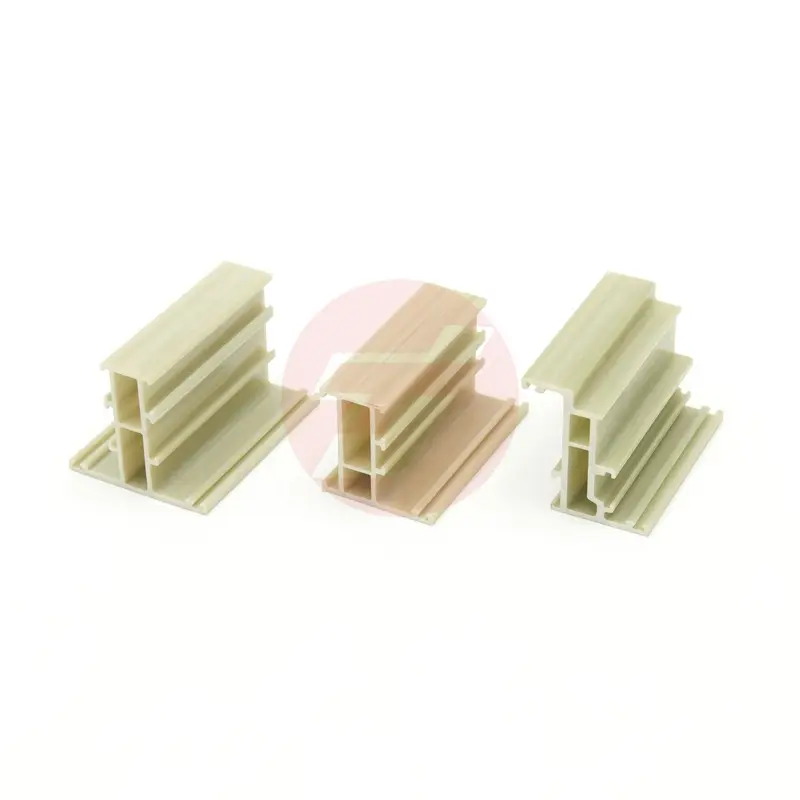
The fundamental reason engineers consistently choose epoxy pultruded parts lies in their unique combination of chemical resistance, mechanical strength, and dimensional stability under conditions that would compromise traditional materials like steel or aluminum. These composite components are manufactured through a continuous pultrusion process that impregnates reinforcing fibers with epoxy resin, creating parts with exceptional performance characteristics that address the specific challenges of harsh environmental applications.
Superior Chemical Resistance Properties
Corrosion Immunity in Aggressive Chemical Environments
Engineers select epoxy pultruded parts primarily because of their outstanding resistance to chemical attack, which represents a significant advantage over metallic alternatives in harsh environments. Unlike steel components that require extensive protective coatings and ongoing maintenance to prevent corrosion, epoxy pultruded parts maintain their structural integrity when exposed to acids, bases, solvents, and other corrosive substances commonly found in industrial settings.
The molecular structure of epoxy resins provides inherent chemical stability that prevents degradation even under prolonged exposure to harsh chemicals. This resistance extends to a wide range of substances including sulfuric acid, hydrochloric acid, sodium hydroxide, and various organic solvents that would rapidly compromise traditional materials. Engineers working in chemical processing, water treatment, and marine environments particularly value this characteristic because it eliminates the need for protective coatings that can fail and require replacement.
The non-reactive nature of epoxy pultruded parts also prevents galvanic corrosion, which occurs when dissimilar metals are in contact in the presence of an electrolyte. This electrochemical compatibility makes these components ideal for applications where they interface with different materials, eliminating a common failure mode that engineers must otherwise carefully manage through isolation or protective measures.
Long-Term Stability Under Chemical Exposure
The long-term performance of epoxy pultruded parts under chemical exposure provides engineers with predictable service life calculations that are essential for maintenance planning and lifecycle cost analysis. Unlike materials that may show initial resistance but gradually degrade under sustained chemical attack, properly formulated epoxy systems maintain their properties over extended periods, allowing for accurate service life predictions.
Testing data demonstrates that epoxy pultruded parts can withstand thousands of hours of exposure to concentrated chemicals with minimal property degradation. This stability allows engineers to design systems with confidence in the material's long-term performance, reducing the need for frequent inspections and premature replacements that can be costly and disruptive to operations.
The chemical stability of these components also extends to resistance against environmental factors such as UV radiation, ozone, and temperature cycling that can accelerate degradation in other materials. This comprehensive resistance profile makes epoxy pultruded parts particularly valuable in outdoor applications or environments where multiple degradation mechanisms may be present simultaneously.
Mechanical Performance Under Extreme Conditions
High Strength-to-Weight Ratio Benefits
Engineers choose epoxy pultruded parts for their exceptional mechanical properties that combine high strength with low weight, providing significant advantages in structural applications where both load-bearing capacity and weight limitations are critical factors. The continuous fiber reinforcement aligned along the length of pultruded components creates directional strength properties that can exceed those of steel while weighing significantly less.
This high strength-to-weight ratio translates into practical engineering benefits such as reduced foundation requirements, easier handling during installation, and lower transportation costs. In applications such as pedestrian bridges, equipment platforms, or structural framing in corrosive environments, engineers can achieve the required load capacity while minimizing the overall system weight and associated support structure requirements.
The mechanical properties of epoxy pultruded parts remain consistent across a wide temperature range, providing engineers with reliable performance data for design calculations. Unlike some materials that may become brittle at low temperatures or lose strength at elevated temperatures, properly formulated epoxy systems maintain their mechanical integrity across the temperature ranges commonly encountered in industrial applications.
Fatigue Resistance and Dynamic Loading Performance
The fatigue resistance of epoxy pultruded parts represents another critical factor in their selection for harsh environment applications where components may experience repeated loading cycles over extended service periods. The composite structure distributes stress effectively, preventing the crack initiation and propagation that can lead to catastrophic failure in metals subjected to cyclic loading.
Engineers particularly value this fatigue resistance in applications such as walkways, platforms, and support structures that experience regular foot traffic or equipment vibration. The ability to withstand millions of loading cycles without degradation provides design confidence and reduces the need for frequent inspection and replacement schedules that can be challenging to implement in remote or hazardous locations.
Dynamic loading scenarios, such as those encountered in seismic zones or applications with vibrating equipment, further demonstrate the advantages of epoxy pultruded parts. The damping characteristics of the composite material help reduce transmitted vibrations while maintaining structural integrity under dynamic conditions that might cause resonance or failure in more rigid materials.
Environmental Durability and Longevity
Temperature Stability and Thermal Performance
Engineers select epoxy pultruded parts for their ability to maintain dimensional stability and mechanical properties across wide temperature ranges commonly encountered in harsh environments. The low coefficient of thermal expansion reduces thermal stress buildup and prevents the binding or warping issues that can occur with materials having higher thermal expansion rates when subjected to temperature cycling.
The thermal properties of epoxy pultruded parts enable their use in applications ranging from cryogenic storage facilities to high-temperature process equipment environments. This temperature stability eliminates the need for expansion joints or special mounting arrangements that would be required with materials having higher thermal expansion coefficients, simplifying system design and reducing potential failure points.
Thermal conductivity characteristics of epoxy pultruded parts also provide advantages in certain applications by reducing heat transfer and providing natural insulation properties. This characteristic can be particularly valuable in process equipment applications where temperature control is critical or where personnel protection from hot or cold surfaces is required.
UV Resistance and Weatherability
The inherent UV resistance of properly formulated epoxy pultruded parts makes them suitable for outdoor applications where prolonged exposure to sunlight would degrade other materials. Engineers can specify these components for external structures, equipment housings, and architectural applications without concern for UV-induced property degradation that affects many polymeric materials.
Weatherability testing demonstrates that epoxy pultruded parts maintain their color, surface integrity, and mechanical properties even after years of exposure to outdoor conditions including UV radiation, temperature cycling, and moisture exposure. This long-term stability reduces maintenance requirements and preserves the aesthetic appearance of installations over their service life.
The combination of UV resistance with other environmental durability factors creates a material system that requires minimal maintenance even in harsh outdoor environments. Engineers can design with confidence that the components will maintain their specified properties throughout the design life without the need for protective coatings, frequent inspections, or premature replacement due to environmental degradation.
Design Flexibility and Manufacturing Advantages
Complex Geometry Capabilities
Engineers choose epoxy pultruded parts because the pultrusion manufacturing process enables the production of complex cross-sectional geometries that would be difficult or impossible to achieve with traditional materials. Custom profiles can be designed to optimize material distribution for specific loading conditions while integrating features such as mounting points, channels, or reinforcement ribs directly into the component during manufacturing.
This design flexibility allows engineers to optimize structural efficiency by placing material exactly where it is needed for strength and stiffness requirements while minimizing weight and material usage. Complex hollow sections, multi-chamber profiles, and components with varying wall thicknesses can be produced with consistent quality and dimensional accuracy that meets tight engineering tolerances.
The ability to incorporate different fiber types and orientations during the pultrusion process enables engineers to tailor the mechanical properties of epoxy pultruded parts to match specific application requirements. This customization capability extends to surface finishes, colors, and specialized features that can be integrated during manufacturing rather than added as secondary operations.
Consistent Quality and Dimensional Accuracy
The controlled nature of the pultrusion manufacturing process produces epoxy pultruded parts with consistent mechanical properties and dimensional accuracy that engineers can rely upon for critical applications. Unlike hand-laid composite processes that can introduce variability, pultrusion provides reproducible quality that meets the stringent requirements of engineering applications in harsh environments.
Dimensional tolerances achievable with pultruded components enable direct replacement of metal parts in many applications without requiring redesign of mating components or assembly procedures. This interchangeability simplifies retrofitting existing systems with corrosion-resistant alternatives while maintaining proper fit and function of the overall assembly.
Quality control measures inherent in the pultrusion process include continuous monitoring of resin content, fiber placement, and curing parameters that ensure each component meets specified performance criteria. This process control provides engineers with confidence in material properties and eliminates the variability that can occur with other manufacturing methods.
Economic and Operational Benefits
Lifecycle Cost Advantages
Engineers select epoxy pultruded parts primarily because their total cost of ownership typically proves lower than alternatives when evaluated over the complete service life in harsh environments. While initial material costs may be higher than steel or aluminum, the elimination of protective coatings, reduced maintenance requirements, and extended service life create significant cost savings over the component lifecycle.
Maintenance cost reductions represent a major economic driver for selecting epoxy pultruded parts in harsh environments where access for maintenance may be difficult, dangerous, or expensive. The corrosion resistance and environmental durability eliminate the need for regular repainting, coating renewal, or component replacement that would be required with traditional materials in similar service conditions.
Labor cost savings extend beyond reduced maintenance to include easier handling and installation due to the lighter weight of epoxy pultruded parts compared to equivalent metal components. Reduced installation time, lower transportation costs, and decreased need for heavy lifting equipment contribute to overall project cost reductions that engineers must consider in material selection decisions.
Safety and Performance Reliability
The non-conductive properties of epoxy pultruded parts provide important safety benefits in applications where electrical conductivity of metal components could create hazards or interfere with system operation. Engineers working with electrical equipment, instrumentation systems, or applications where lightning protection is a concern value this electrical isolation capability.
Slip resistance characteristics of textured epoxy pultruded parts enhance safety in walkway and platform applications, particularly in wet or contaminated environments where traditional materials might become dangerously slippery. The ability to mold non-slip surfaces directly into the component during manufacturing eliminates the need for applied coatings or treatments that might wear away over time.
Fire resistance properties of properly formulated epoxy systems meet safety requirements for many industrial applications while maintaining structural integrity under elevated temperature conditions. Engineers can specify epoxy pultruded parts with confidence that they will meet building codes and safety standards while providing the corrosion resistance and mechanical properties required for harsh environment service.
FAQ
How long do epoxy pultruded parts last in harsh chemical environments?
Properly selected epoxy pultruded parts can provide service life of 20 to 50 years or more in harsh chemical environments, depending on the specific chemicals present, temperature conditions, and stress levels. The key to achieving maximum service life lies in selecting the appropriate epoxy resin system and reinforcement materials for the specific chemical exposure conditions. Unlike metals that may corrode rapidly in certain environments, epoxy pultruded parts maintain their structural integrity throughout their service life with minimal property degradation.
Can epoxy pultruded parts replace steel components in structural applications?
Yes, epoxy pultruded parts can successfully replace steel components in many structural applications, particularly where corrosion resistance is important. The high strength-to-weight ratio and directional strength properties of pultruded profiles often match or exceed steel performance while providing significant advantages in corrosive environments. However, proper engineering analysis is essential to ensure the component design accounts for the different mechanical properties and behavior characteristics of composite materials compared to steel.
What temperature ranges can epoxy pultruded parts withstand?
Standard epoxy pultruded parts typically operate effectively in temperature ranges from -40°F to 200°F (-40°C to 93°C), with some specialized formulations capable of higher temperature service up to 300°F (150°C) or more. The specific temperature capability depends on the epoxy resin system used, reinforcement type, and stress levels in the application. Engineers should verify temperature ratings with manufacturers when selecting components for applications approaching temperature limits.
Are epoxy pultruded parts cost-effective compared to traditional materials?
Epoxy pultruded parts demonstrate superior cost-effectiveness in harsh environments when evaluated on a lifecycle cost basis rather than initial purchase price alone. While upfront costs may be higher than steel or aluminum, the elimination of maintenance requirements, protective coatings, and premature replacement typically results in lower total cost of ownership. The cost advantage becomes more pronounced in applications with difficult access, high maintenance labor costs, or where system downtime for maintenance creates significant operational impact.