 EN
EN
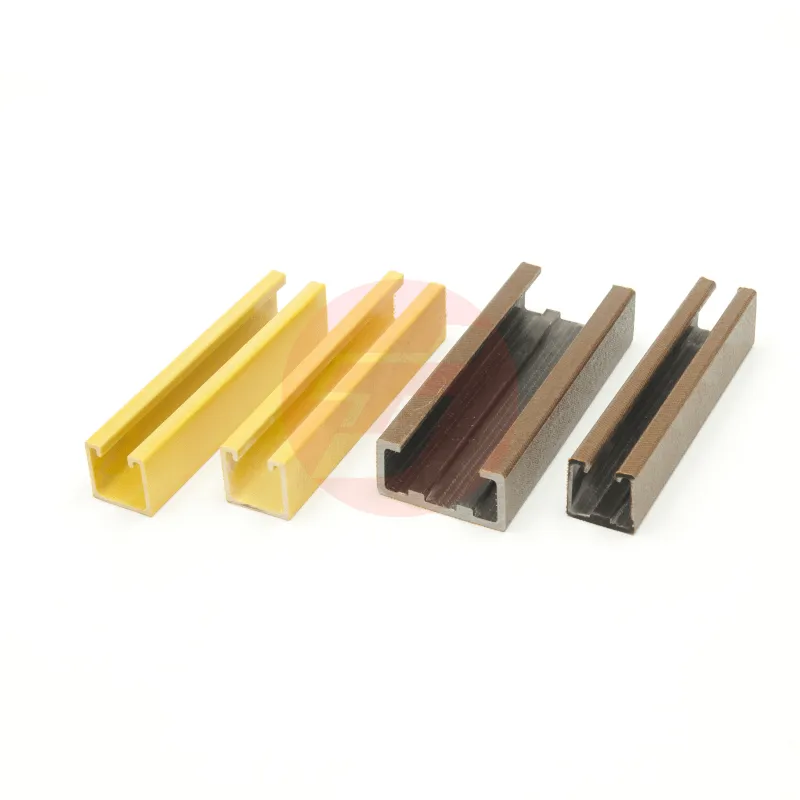
Epoxy resin serves as the foundational matrix material that transforms individual fibers into structurally stable pultruded components through a sophisticated chemical bonding process. During the pultrusion manufacturing method, epoxy resin undergoes cross-linking reactions that create three-dimensional polymer networks, effectively binding reinforcement fibers together while providing exceptional dimensional stability and mechanical integrity to the final composite structure.
The stability enhancement mechanism of epoxy resin in pultrusion processes involves multiple interconnected factors including thermal resistance, moisture barrier properties, and superior adhesion characteristics that work synergistically to prevent delamination, warping, and structural degradation over extended service periods. Understanding these mechanisms enables engineers to optimize epoxy resin pultrusion parameters for maximum component stability in demanding industrial applications.
Chemical Cross-Linking Mechanisms in Epoxy Resin Systems
Thermosetting Polymerization Process
The thermosetting nature of epoxy resin creates irreversible chemical bonds during the pultrusion curing process, forming a rigid three-dimensional network structure that provides exceptional stability to pultruded components. When epoxy resin is heated within the pultrusion die, the epoxide groups react with hardening agents through ring-opening polymerization, creating covalent cross-links that lock the polymer chains into a permanent configuration. This cross-linked structure prevents the material from softening or deforming under subsequent heat exposure, ensuring dimensional stability throughout the component's operational temperature range.
The degree of cross-linking achieved during epoxy resin pultrusion directly influences the final component's stability characteristics, with higher cross-link density resulting in improved mechanical properties and reduced susceptibility to environmental degradation. Advanced epoxy formulations incorporate multiple reactive sites that enable extensive cross-linking, creating a dense polymer network that effectively transfers loads between reinforcement fibers while maintaining structural integrity under cyclic loading conditions.
Molecular Adhesion Between Resin and Reinforcement
Epoxy resin demonstrates superior adhesion to various reinforcement materials through multiple bonding mechanisms including hydrogen bonding, van der Waals forces, and covalent chemical interactions that create strong interfacial bonds essential for component stability. The polar hydroxyl and ether groups within the cured epoxy structure form hydrogen bonds with surface functional groups on glass, carbon, and aramid fibers, creating intimate molecular contact that prevents fiber-matrix debonding under mechanical stress.
During the epoxy resin pultrusion process, the low viscosity of uncured resin allows complete fiber wet-out and penetration into fiber bundles, eliminating voids and ensuring uniform load distribution throughout the composite structure. This thorough impregnation, combined with the excellent wetting characteristics of epoxy resin, creates a homogeneous composite material where mechanical loads are efficiently transferred from the matrix to the high-strength reinforcement fibers.
Dimensional Stability Enhancement Mechanisms
Low Coefficient of Thermal Expansion
Epoxy resin exhibits a relatively low coefficient of thermal expansion compared to other thermoplastic matrices, which significantly enhances the dimensional stability of pultruded components across varying temperature conditions. The rigid cross-linked structure of cured epoxy resin restricts molecular motion and thermal expansion, maintaining precise dimensional tolerances even when components experience substantial temperature fluctuations during service.
In epoxy resin pultrusion applications, the controlled thermal expansion characteristics prevent warping, buckling, and dimensional distortion that could compromise component performance in precision engineering applications. The stable dimensional properties of epoxy-based pultruded profiles make them particularly suitable for structural applications where maintaining exact geometries is critical for proper assembly and long-term performance reliability.
Moisture Resistance and Hydrolytic Stability
The dense cross-linked structure of cured epoxy resin creates an effective barrier against moisture penetration, preventing water-induced swelling, dimensional changes, and mechanical property degradation that can compromise component stability. Epoxy resin pultrusion processes typically achieve low void content and uniform density distribution, further enhancing moisture resistance by eliminating pathways for water ingress into the composite structure.
Advanced epoxy formulations used in pultrusion applications incorporate hydrophobic chemical groups and moisture-resistant additives that provide enhanced protection against humid environments and direct water exposure. This moisture resistance is particularly important for outdoor applications and marine environments where conventional materials might experience significant dimensional changes or structural degradation due to water absorption.
Mechanical Property Stabilization Through Epoxy Matrix
Load Transfer Efficiency and Stress Distribution
The mechanical properties of epoxy resin enable efficient load transfer between reinforcement fibers, creating a stable stress distribution pattern that prevents localized failure modes and extends component service life. During loading conditions, the stiff epoxy matrix effectively distributes applied forces across the entire fiber network, preventing individual fiber overloading and maintaining structural integrity under complex stress states.
Epoxy resin pultrusion processes optimize the matrix-to-fiber ratio to achieve maximum load transfer efficiency while maintaining adequate matrix properties for stability. The balanced mechanical properties of epoxy resin, including appropriate modulus, strength, and elongation characteristics, ensure compatibility with various reinforcement types and enable the production of stable composite components for diverse engineering applications.
Fatigue Resistance and Long-Term Performance
The excellent fatigue resistance of epoxy resin contributes significantly to the long-term stability of pultruded components by preventing progressive damage accumulation under cyclic loading conditions. The tough, cross-linked structure of epoxy resin resists crack initiation and propagation, maintaining matrix integrity throughout extended service periods even under repeated stress cycles.
In pultrusion manufacturing, the controlled curing conditions and uniform fiber distribution achieved with epoxy resin systems result in components with predictable fatigue behavior and stable performance characteristics over millions of load cycles. This fatigue resistance is essential for applications involving dynamic loads, vibration, or thermal cycling where component stability must be maintained throughout the design life.
Environmental Stability and Chemical Resistance
Chemical Inertness and Corrosion Protection
Epoxy resin provides excellent chemical resistance that protects pultruded components from environmental degradation and maintains stability in aggressive chemical environments. The cross-linked polymer structure of cured epoxy resin is largely inert to most common chemicals, acids, bases, and solvents, preventing chemical attack that could weaken the matrix or compromise fiber-matrix adhesion.
During epoxy resin pultrusion, the complete curing and cross-linking process creates a chemically stable matrix that acts as a protective barrier for the reinforcement fibers, preventing corrosion or chemical degradation that could reduce component strength and stability over time. This chemical protection is particularly valuable in industrial applications involving exposure to corrosive chemicals, salt spray, or aggressive atmospheric conditions.
UV Resistance and Weathering Stability
Modern epoxy resin formulations incorporate UV stabilizers and weather-resistant additives that maintain component stability under prolonged outdoor exposure and prevent photodegradation of the polymer matrix. The stable chemical structure of properly formulated epoxy resin resists UV-induced chain scission and oxidation reactions that could weaken the matrix and compromise component integrity.
Epoxy resin pultrusion processes can accommodate various protective additives and surface treatments that enhance weathering resistance while maintaining the fundamental stability characteristics of the base resin system. This environmental stability ensures that pultruded components maintain their mechanical properties and dimensional accuracy throughout extended outdoor service, even in harsh climatic conditions with high UV exposure and temperature extremes.
Process Control and Quality Assurance in Epoxy Pultrusion
Temperature and Curing Profile Optimization
Precise control of temperature profiles during epoxy resin pultrusion ensures complete curing and optimal cross-link density, which directly impacts the stability and performance characteristics of the finished components. The pultrusion process requires carefully designed heating zones that allow gradual temperature ramping to achieve uniform curing throughout the cross-section while preventing thermal shock or incomplete polymerization that could compromise stability.
Advanced epoxy resin systems designed for pultrusion applications feature controlled reactivity profiles that enable processing within specific temperature windows while achieving maximum cross-link density and stability. The optimization of curing parameters, including temperature, time, and heating rate, ensures consistent material properties and dimensional stability across production batches.
Fiber Volume Fraction and Resin Distribution
The stability of pultruded components depends heavily on achieving optimal fiber volume fractions and uniform resin distribution throughout the composite structure during the epoxy resin pultrusion process. Proper fiber wet-out and resin impregnation ensure maximum fiber-matrix adhesion and eliminate voids that could act as stress concentrators or moisture ingress points.
Quality control measures during pultrusion manufacturing monitor resin content, fiber alignment, and void content to ensure consistent component stability and performance. The processing characteristics of epoxy resin, including viscosity, pot life, and flow properties, must be carefully matched to the pultrusion line speed and die configuration to achieve optimal component quality and stability.
FAQ
What makes epoxy resin more effective than other matrix materials for improving pultrusion stability?
Epoxy resin offers superior stability enhancement in pultrusion applications due to its thermosetting nature, which creates irreversible cross-links that provide dimensional stability, excellent fiber adhesion properties that prevent delamination, and outstanding chemical resistance that protects components from environmental degradation. Unlike thermoplastic matrices, epoxy resin maintains its properties at elevated temperatures and provides consistent performance throughout the component's service life.
How does the curing process of epoxy resin during pultrusion affect component stability?
The curing process transforms liquid epoxy resin into a rigid, cross-linked network through controlled heating in the pultrusion die, creating a stable three-dimensional structure that locks reinforcement fibers in place and prevents dimensional changes or mechanical property degradation. Proper curing ensures complete cross-linking, optimal fiber-matrix adhesion, and uniform material properties that contribute to long-term component stability and reliability.
Can epoxy resin pultrusion produce components stable enough for high-stress applications?
Yes, epoxy resin pultrusion can produce components with exceptional stability suitable for high-stress applications including aerospace, automotive, and industrial structural applications. The combination of high-strength reinforcement fibers with the stable epoxy matrix creates composites with excellent strength-to-weight ratios, fatigue resistance, and dimensional stability that often exceed the performance of traditional materials like steel or aluminum in demanding applications.
What factors during the epoxy pultrusion process most significantly impact final component stability?
The most critical factors affecting component stability in epoxy resin pultrusion include achieving complete and uniform curing through proper temperature control, maintaining optimal fiber volume fraction and alignment, ensuring thorough resin impregnation to eliminate voids, and selecting appropriate epoxy formulations with suitable mechanical and thermal properties for the specific application requirements. These factors work together to maximize the stability-enhancing benefits of the epoxy matrix system.
Table of Contents
- Chemical Cross-Linking Mechanisms in Epoxy Resin Systems
- Dimensional Stability Enhancement Mechanisms
- Mechanical Property Stabilization Through Epoxy Matrix
- Environmental Stability and Chemical Resistance
- Process Control and Quality Assurance in Epoxy Pultrusion
-
FAQ
- What makes epoxy resin more effective than other matrix materials for improving pultrusion stability?
- How does the curing process of epoxy resin during pultrusion affect component stability?
- Can epoxy resin pultrusion produce components stable enough for high-stress applications?
- What factors during the epoxy pultrusion process most significantly impact final component stability?