
 EN
EN

FRP pultrusion molds represent a critical investment for manufacturers seeking to streamline composite production and maximize operational efficiency. These precision-engineered tools shape continuous fiber-reinforced polymer materials into consistent, high-quality profiles at scale. Understanding how FRP pultrusion molds enhance manufacturing performance is essential for B2B operations competing in today's demanding industrial landscape.
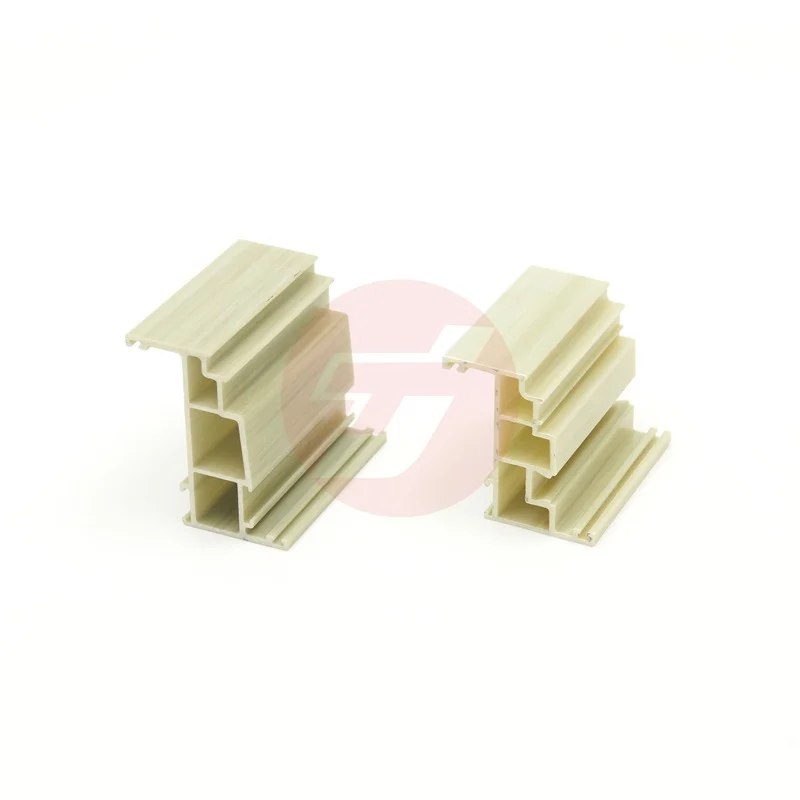
The integration of FRP pultrusion molds into manufacturing lines directly impacts throughput, material consistency, and production cost management. Advanced mold design combined with optimized thermal control systems enables faster cycle times while maintaining strict dimensional tolerances that downstream operations require.
How FRP Pultrusion Molds Accelerate Production Cycles
Optimized Heat Transfer and Curing Mechanisms
FRP pultrusion molds incorporate sophisticated internal cooling and heating channels that regulate temperature distribution across the profile cross-section. Precise thermal management during the pultrusion process ensures resin cures uniformly, reducing cycle times significantly compared to conventional methods. By maintaining optimal curing temperatures, FRP pultrusion molds eliminate weak points and minimize material waste caused by uneven polymerization.
The geometric design of FRP pultrusion molds determines material flow characteristics and pressure distribution throughout the curing zone. Modern mold designs minimize dead zones where resin may pool or cure improperly, ensuring every fiber experiences the same processing conditions. This uniformity translates directly to higher production rates without sacrificing product quality or structural integrity.
Dimensional Consistency and Surface Finishing
FRP pultrusion molds maintain exceptionally tight tolerances, typically within plus or minus 0.1mm across complex profile geometries. This precision consistency eliminates the need for secondary finishing operations that add time and cost to the production cycle. When downstream processes receive components within specification on first pull, manufacturing lines operate without bottlenecks or rework delays.
Advanced surface treatments applied to FRP pultrusion molds reduce sticking and surface defects that commonly interrupt production flow. Anti-adhesive coatings allow finished profiles to release cleanly with minimal manual intervention, reducing cycle interruption and operator labor requirements per unit produced.
Cost Reduction and Material Efficiency Advantages
Minimizing Scrap and Rework Rates
FRP pultrusion molds engineered for precision dramatically reduce material scrap rates throughout production runs. When dimensional accuracy is assured from the mold itself, defect rates drop significantly, meaning less material is wasted on components that fail specification checks. Over extended production cycles, this translates to substantial savings in raw material costs that directly improve profit margins.
Rework and secondary processing become rare when FRP pultrusion molds deliver consistent quality from the initial pullthrough. Manufacturers avoid costly delays associated with identifying defects, sorting components, and running corrective batches. The compounding effect of zero-rework production across hundreds of thousands of units results in transformative cost structure improvements.
Extended Mold Life and Total Cost of Ownership
High-quality FRP pultrusion molds constructed from durable materials and engineered with precision tooling maintain performance across extended production runs spanning hundreds of thousands of cycles. The superior heat distribution and stress distribution within well-designed molds prevents premature wear and thermal degradation that shortens mold life. Manufacturers benefit from lower per-unit amortization when molds remain production-ready longer before requiring replacement.
Proper maintenance protocols for FRP pultrusion molds involve routine inspection, careful temperature cycling, and preventative thermal conditioning that preserve dimensional stability. When molds remain accurate and reliable, unexpected maintenance shutdowns become rare, and production schedules remain predictable and achievable throughout fiscal planning periods.
Integration with Industry 4.0 Manufacturing Systems
Real-Time Performance Monitoring and Adaptive Control
Modern FRP pultrusion molds equipped with embedded temperature sensors and pressure monitoring systems provide continuous feedback to production control systems. This data integration enables automated adjustments to processing parameters that maintain optimal conditions throughout extended production runs, ensuring consistent output quality without operator intervention. Closed-loop feedback systems maintain FRP pultrusion molds at their peak efficiency settings automatically.
Advanced manufacturing facilities leverage sensor data from FRP pultrusion molds to predict maintenance requirements before failures occur, reducing unplanned downtime and extending equipment life. Predictive algorithms identify thermal anomalies or pressure fluctuations that signal early mold degradation, allowing planned maintenance that fits production schedules rather than disrupting operations unexpectedly.
Scalability and Rapid Changeover Capability
FRP pultrusion molds designed with modular components allow manufacturers to quickly transition between different product profiles within the same pultrusion line. Quick-change interfaces and standardized mounting systems minimize setup time, enabling smaller batch productions and more flexible response to customer demand variations. This agility becomes increasingly valuable as markets demand customized products with shorter lead times.
The ability to reconfigure production lines rapidly using interchangeable FRP pultrusion molds reduces inventory carrying costs and improves capital utilization across manufacturing facilities. Manufacturers can dedicate single lines to multiple product families, maximizing equipment productivity and supporting just-in-time inventory strategies that reduce working capital requirements.
FAQ
What specific features make FRP pultrusion molds more efficient than older mold designs?
Modern FRP pultrusion molds incorporate advanced thermal control systems with precision-engineered cooling channels, optimized resin flow geometry, and durable surface coatings that prevent sticking. These features work together to reduce cycle times, minimize scrap, and maintain dimensional consistency, delivering efficiency improvements of 20-40% compared to older conventional mold designs. Enhanced material properties and precision machining also extend mold service life significantly.
How do FRP pultrusion molds contribute to lower per-unit production costs?
FRP pultrusion molds reduce per-unit costs through multiple mechanisms: minimizing material scrap through accurate tolerances, eliminating rework by ensuring first-pass quality, reducing cycle time that increases throughput, and extending mold life to lower amortization costs per component produced. When combined, these factors create substantial cost advantages that compound over high-volume production runs, making FRP pultrusion molds a strategic investment rather than a discretionary expense.
Can FRP pultrusion molds integrate with existing manufacturing systems?
Yes, FRP pultrusion molds are designed for compatibility with standard pultrusion equipment and can integrate with both legacy systems and Industry 4.0 smart manufacturing platforms. Modern molds feature sensor-ready designs and standardized interfaces that allow seamless data connectivity to production control systems. Retrofit capabilities and modular construction enable manufacturers to upgrade existing lines incrementally without requiring complete equipment replacement.